
© Adobe Stock/bird_saranyoo | A rural healthcare worker uses digital technology to access patient information.
- Services are becoming central to production and exports.
- least developed countries are capturing little of the growth in digital trade.
- UNCTAD identifies gaps in data, infrastructure, skills and participation in trade negotiations.
Services are increasingly embedded in production across sectors. Logistics, finance, design and data management are built into what farms and factories produce and export, even when the final product is a physical good.
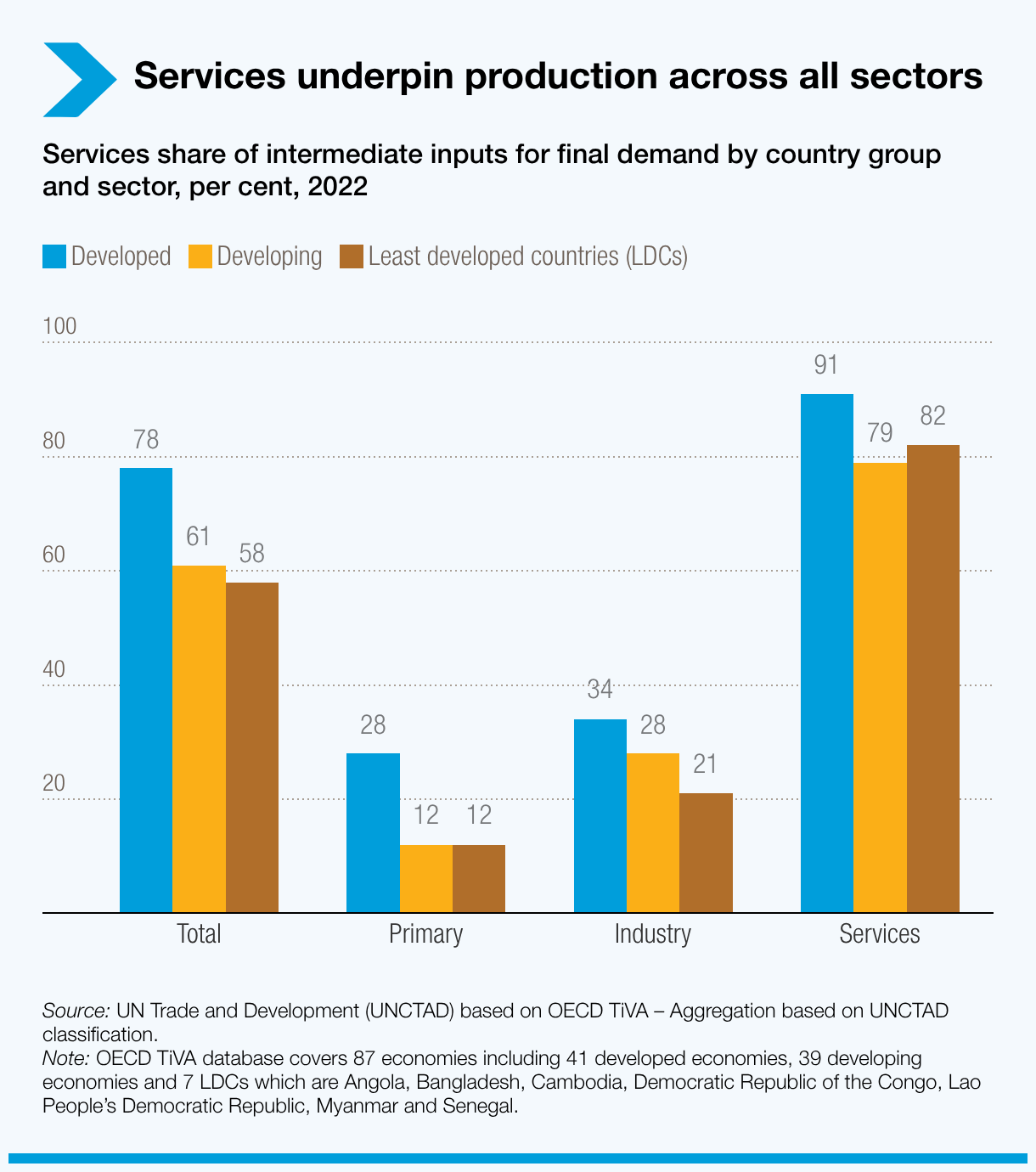
By 2022, services accounted for 71% of the intermediate inputs used in production worldwide. Their share of global exports also rose from 23% in 2015 to 27% in 2025, according to the latest Global Trade Update from UN Trade and Development (UNCTAD).
The size of the services sector does not tell the whole story. Productive, tradable and knowledge-intensive services can raise productivity, support innovation, create higher-value jobs and strengthen firms’ competitiveness. When services are costly, poor quality or unavailable, farms, factories and exporters are less able to compete.
The digital services gap is widening
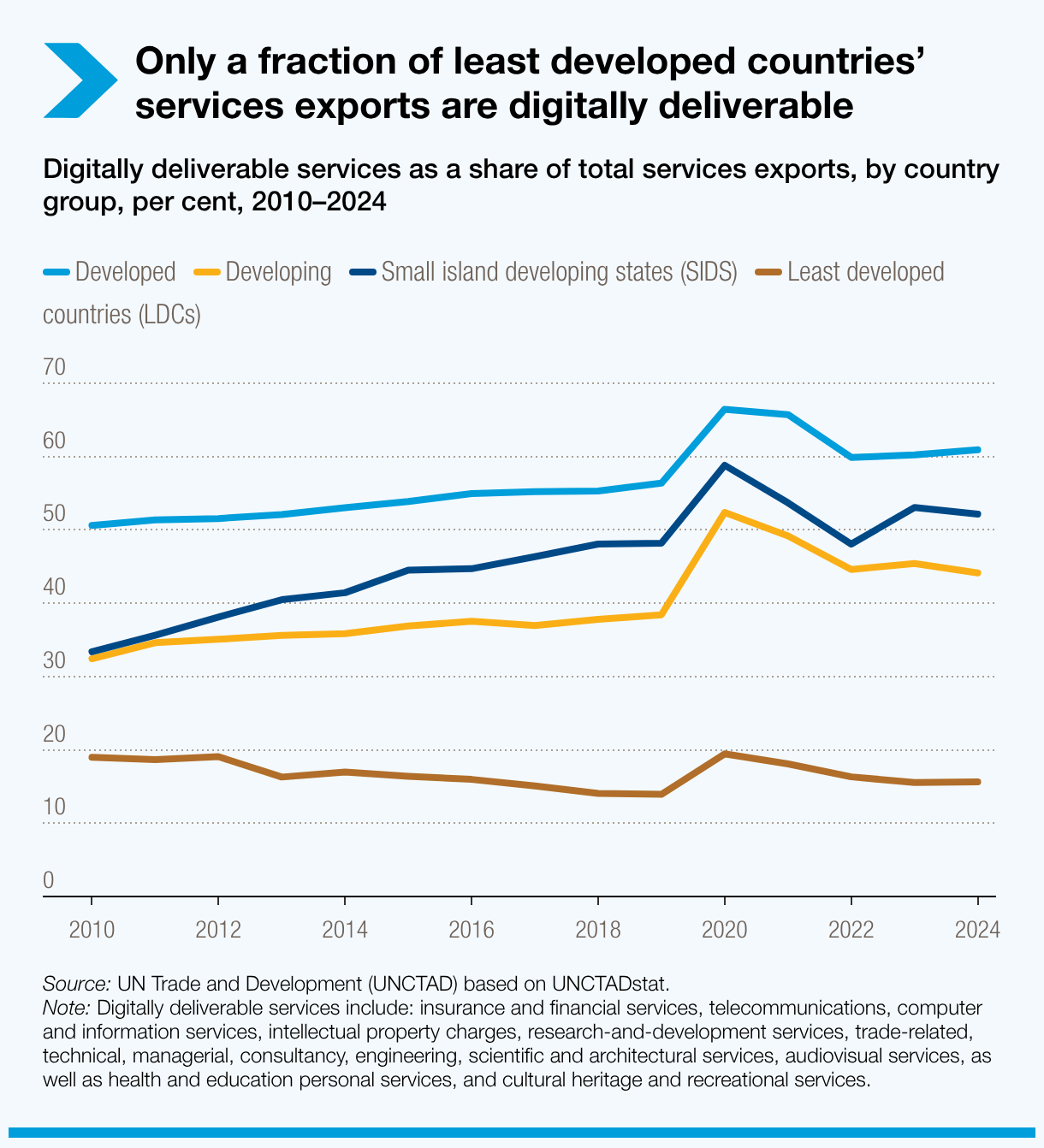
The divide is clearest in digitally deliverable services – those that can be delivered remotely over computer networks. These exports grew by an average of 7.1% a year over the past decade and now represent 56% of global services exports.
In developed economies, the share is about 61%. In least developed countries, it is just 16%. Least developed countries remain heavily reliant on traditional services such as transport and travel and capture only a small share of the fastest-growing segment of global trade.
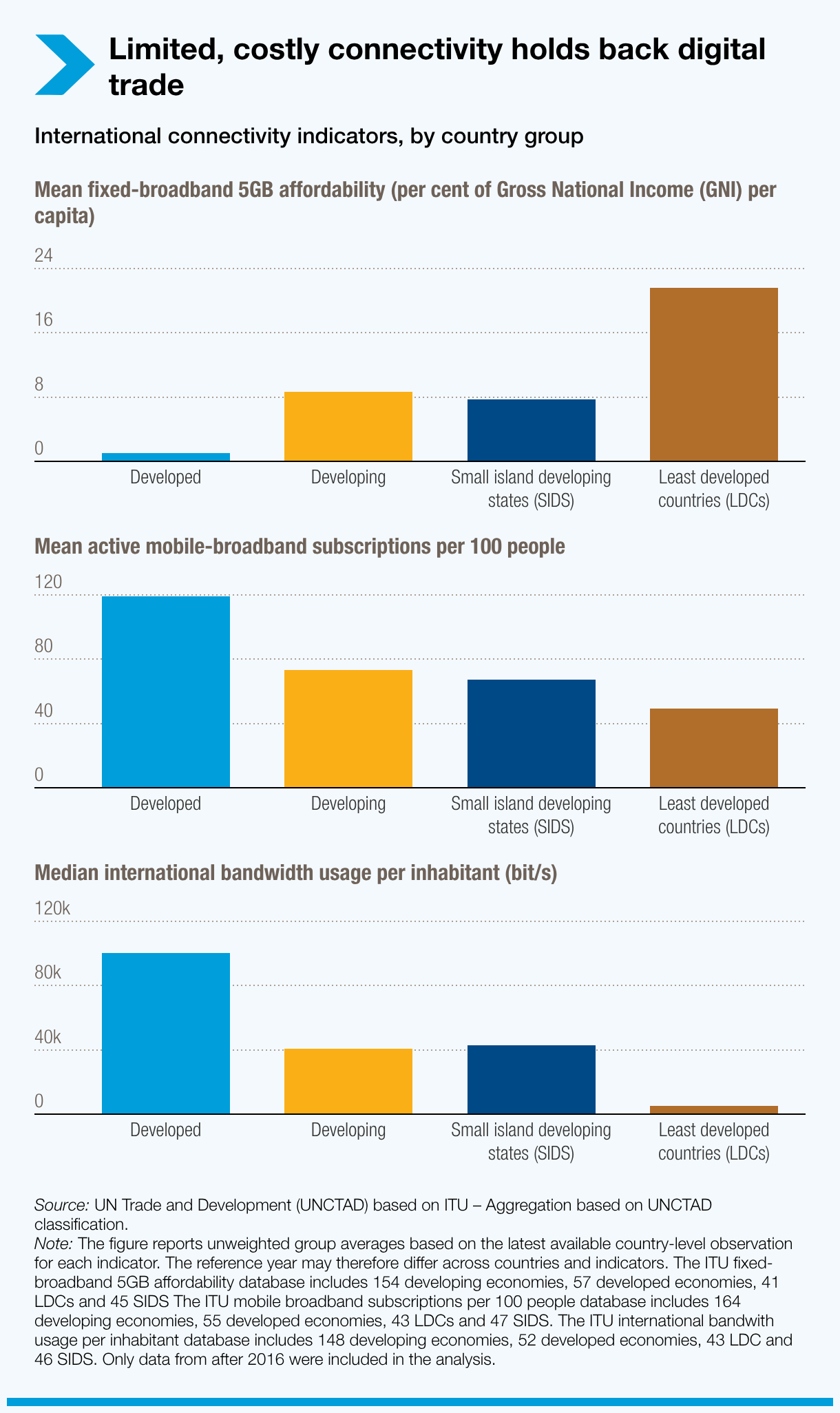
Poor and costly connectivity is one barrier. Others include limited access to cross-border payment systems, gaps in digital skills and weak regulatory frameworks. Micro, small and medium-sized firms and freelancers are particularly affected when they cannot easily receive payments from foreign customers.
Artificial intelligence could deepen these divides. The computing capacity, data, finance and expertise needed to develop and use AI remain concentrated in a small number of economies and firms. Many developing countries are poorly placed to benefit, while AI may automate routine tasks that have provided an entry point into global services markets.
Three priorities to widen participation
UNCTAD identifies three areas for action:
- Governments need better data to measure how services contribute to exports and identify constraints.
- Countries need affordable connectivity, digital payment and identification systems, skills and rules that support digital transactions. International support will be essential where financing and institutional capacity are limited.
- Developing countries need stronger analytical and negotiating capacity to assess digital trade commitments and help shape emerging rules.
The spread of bilateral, regional and plurilateral agreements has created overlapping digital trade rules that are difficult for governments and smaller firms to navigate. Greater transparency, regulatory cooperation and interoperability can reduce fragmentation while preserving countries’ public policy objectives.
The growth of services trade is not enough on its own. Whether it supports development will depend on who can compete in digital markets and who has a say in writing the rules.
RELATED NEWS