Latin America and the Caribbean face a historic structural challenge: informal employment, which affects almost 55% of workers in the region. From home caregivers to people engaged in technical occupations such as bricklayers or plumbers, millions of independent workers are left out of social security systems, without access to credit, insurance, or retirement mechanisms.
This gap not only limits their individual well-being, but also renders them invisible as economic actors. Traditionally, the paradox between flexibility and job security has oscillated between two extremes: on the one hand, the employment benefits of a typical dependent relationship and, on the other, the freedom of self-employment at the cost of vulnerability.
A New Labor Context
In addition to the high rate of informal employment, we also find that, with the growth of the digital economy, the way we work and how we understand work, how it is consumed, and how services are contracted is changing.
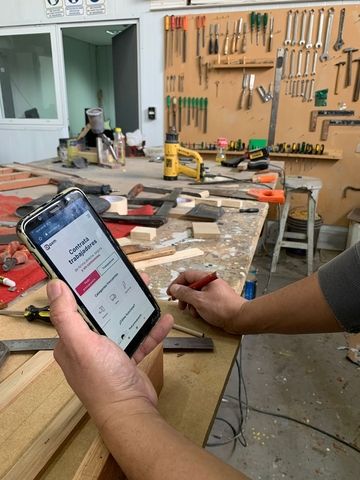
For example, the digitization of occupations has meant that people engaged in technical work for the home no longer depend on word-of-mouth recommendations, as they can now advertise their services on specialized apps or social media.
This positive development also causes a significant digital divide for people who are not proficient in online tools or do not have access to these platforms, given their age, social status, or lack of knowledge.
Furthermore, a large part of the population affected by these new dynamics are people over the age of 50, who require urgent support to ensure their continued employment during this time.
Technological Solutions for Workers
Driven by the need to adapt social and labor protection systems to a reality where traditional employment is in decline and informality is the norm, a couple of years ago at IDB Lab we coined a term that allows us to name the phenomenon, describe the sector, and group our initiatives in the area: WorkerTech.
The play on words between Worker and Tech (due to the nature of the solutions) is preceded by some common uses in the industry, such as "Fintech," which refers to technological solutions in finance, "Agtech" for agriculture, and "Govtech" for government.
We define WorkerTech as the set of digital services designed to offer workers in emerging forms of employment (especially independent and platform workers) benefits, access to protection systems, and defense of their rights.
The main purpose is to rebuild the structure of benefits and protections that were traditionally associated with salaried employment or "Fordist contracts," focusing on the specific needs of the individual.

The First WorkerTech LAC Call for Proposals
Seeking to strengthen the WorkerTech ecosystem in the region, in 2025 we launched the WorkerTech LAC program together with Civic House, an initiative that uses Pitch Competitions to identify and finance new startups that can pilot solutions in the area, build community among them through mentoring, develop partnerships with technology companies, and hold collaboration and leadership meetings.
"This award helps us confirm that investing in the care economy benefits society as a whole, because it is at the heart of every home. It reaffirms that formalization and the creation of safe working environments for those who care for our families are essential. It is an incentive to continue working to generate well-being." Candelaria Sosa, Co-founder of Tributo Simple, winner of WorkerTech LAC.
A total of 126 initiatives were received from 92 startups and organizations from 16 countries in the region.
Fifty percent of the initiatives presented focus on vulnerable populations and 45.2% on the silver economy. On the other hand, 58.7% are led by women, and 84.9% are companies or startups founded in the last two years, demonstrating that this is a sector in full swing.
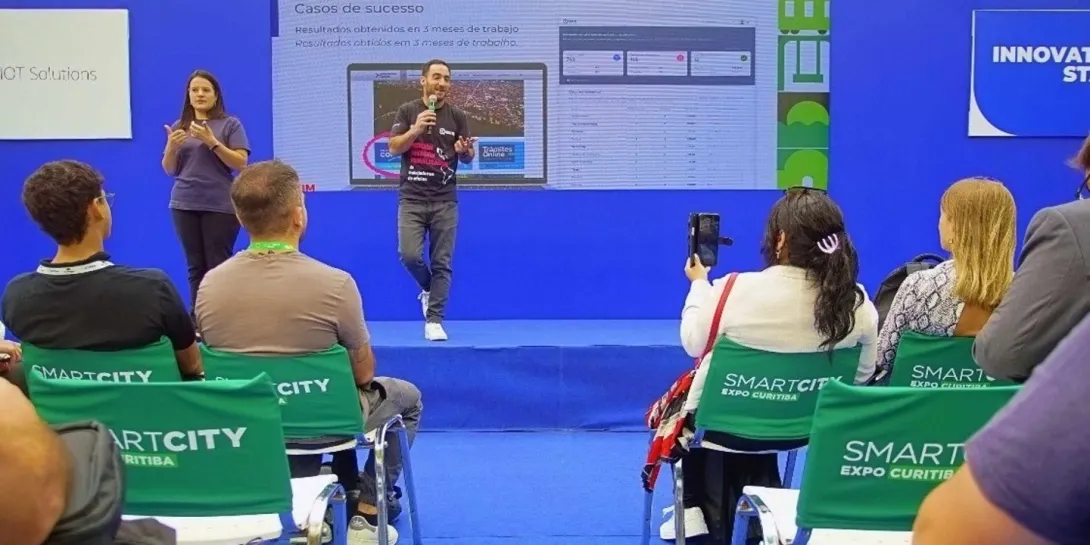
During the recent Global Entrepreneurship and Technology Forum for Latin America and the Caribbean (GET Forum), the winners of the first call for proposals were announced. The selected solutions were:
Doctor CV: Helps users find mistakes in their resumes and LinkedIn profiles in 10 seconds. They also teach them how to improve their presentation for future job opportunities.
DomestikCo SpA: Developed a solution based on artificial intelligence and micro-courses via WhatsApp that improves the employability of domestic and care workers.
Omega SpA: Presented GG, a mobile-first platform that connects and formalizes independent workers through artificial intelligence, geolocation, and integrated payments, promoting safer employment and labor traceability.
Tributo Simple: They presented a platform that automates accounting, tax, and administrative processes using artificial intelligence, facilitating access to formal work and reducing the operational burden on independent workers.
"The coordination has been very efficient, and the mentor's support is key to structuring our objectives. We value this support because, as we are in the validation stage, we need to resolve legal, sales, and fundraising issues. In the future, the project is vital to connecting us with municipalities, financial institutions, and companies, helping us consolidate our ecosystem with their experience." Sofya Tikhomirova, CEO of GG, winner of WorkerTech LAC.
The Commitment Towards 2028
WorkerTech LAC is the evolution of three successful pilot programs previously carried out in Argentina and El Salvador, the latter in conjunction with the Salvadoran Chamber of Information and Communications Technology (CasaTIC). Looking ahead, the program plans to hold four new editions through 2028. In total, 17 innovative solutions have already been awarded.
Now, in this new phase with a regional focus, the plan is to award winners more than $400,000 in non-reimbursable funds.
In addition to the capital, the winning startups will receive specialized mentoring and benefits such as cloud computing credits and training offered by technology experts.
You can learn more about WorkerTech and how technology can improve emerging jobs in Latin America and the Caribbean here.