
In the closing days of its 63rd session, which ran from 7 September to 7 October 2026, the UN Human Rights Council adopted a resolution whose title runs to nineteen words: Strengthening international cooperation for promoting and protecting the rights of women and girls in the context of digital technologies. The idea behind it needs about seven. Women’s rights don’t stop at the screen.
Diplomacy is the art of never saying in seven words what can be negotiated in nineteen, which is less a criticism than a job description; each of those words was presumably fought over by someone. Yet the sentence worth lingering over came from the European Union’s general comment on the text, which reaffirmed, as such statements usually do, that ‘the same rights that people have offline must also be protected online’.
It has been repeated so often, in so many conference rooms and webinars, that it has become liturgy: recited rather than examined. It deserves examining.
Same rights, same wrongs
The formula entered the Council’s vocabulary in 2012, in its first resolution on human rights and the internet, and its logic is one of transfer: whatever protects people offline is to be carried, intact, into the digital world. Tucked inside it is an assumption, namely that the original was worth copying. For a great many women it was not. What the internet reproduced was the whole inheritance, wrongs included.
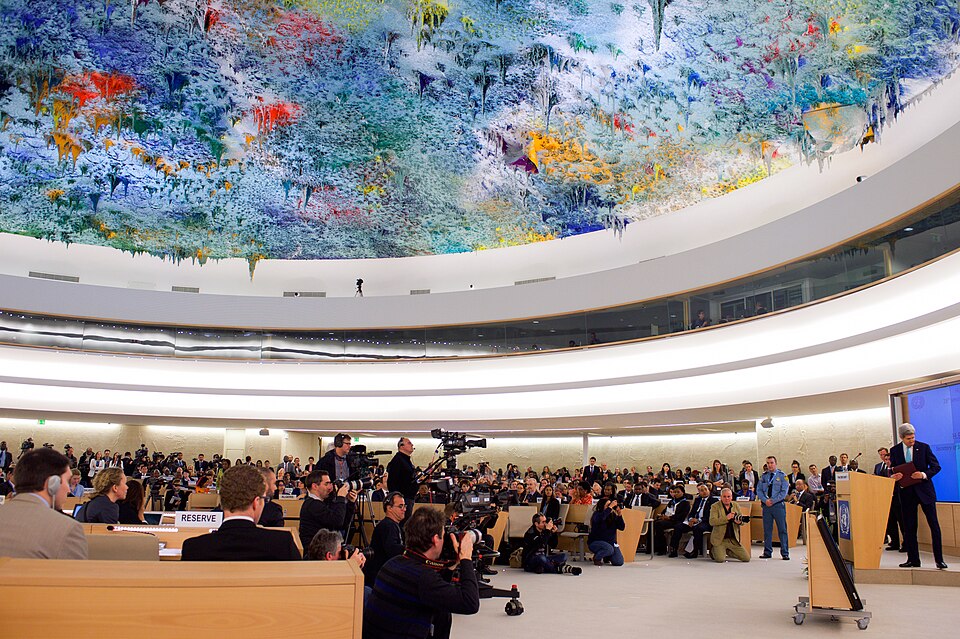
The new text, to its credit, seems to know this. The EU praised it for recognising that digital technologies affect women and girls differently and can entrench existing inequality and discrimination, which is a diplomatic way of conceding the point. The rest of the comment maps where the trouble lives: a gender digital divide in affordable, meaningful access to connectivity, education, and digital literacy; technology-facilitated violence; and data that leaves women out, feeding systems that recycle old stereotypes under new names.
None of this is new. The velocity is. A prejudice that once needed a village to travel now needs a recommender system and an afternoon.
Nothing virtual about it
During the session, the Council’s Advisory Committee presented a study on technology-facilitated gender-based violence that dispenses with the comfortable fiction of the ‘virtual’. Such violence, it finds, sits on a continuum with abuse offline, grows from the same inequalities and deepens them in turn. The catalogue holds few surprises: image-based abuse, dramatically amplified by AI; surveillance, including by states and through spyware; gendered disinformation; misogyny packaged as content.
Then comes the twist that drafters of protective laws rarely anticipate. The Association for Progressive Communications (APC), which contributed to the study, warns that many cybercrime laws are worded so vaguely that they invite arbitrary use, and can end up deepening the very inequalities they were meant to cure. In Paraguay, civil society reports that the legal framework on digital violence, inadequate to begin with, has been turned against free expression, journalists above all. Protection, carelessly drafted, develops symptoms of its own.
APC’s research adds a quieter finding: most AI governance frameworks neglect gender, and this kind of violence with it. The machines are being regulated with some energy. The harm they amplify, less so.
‘I’d blush if I could’
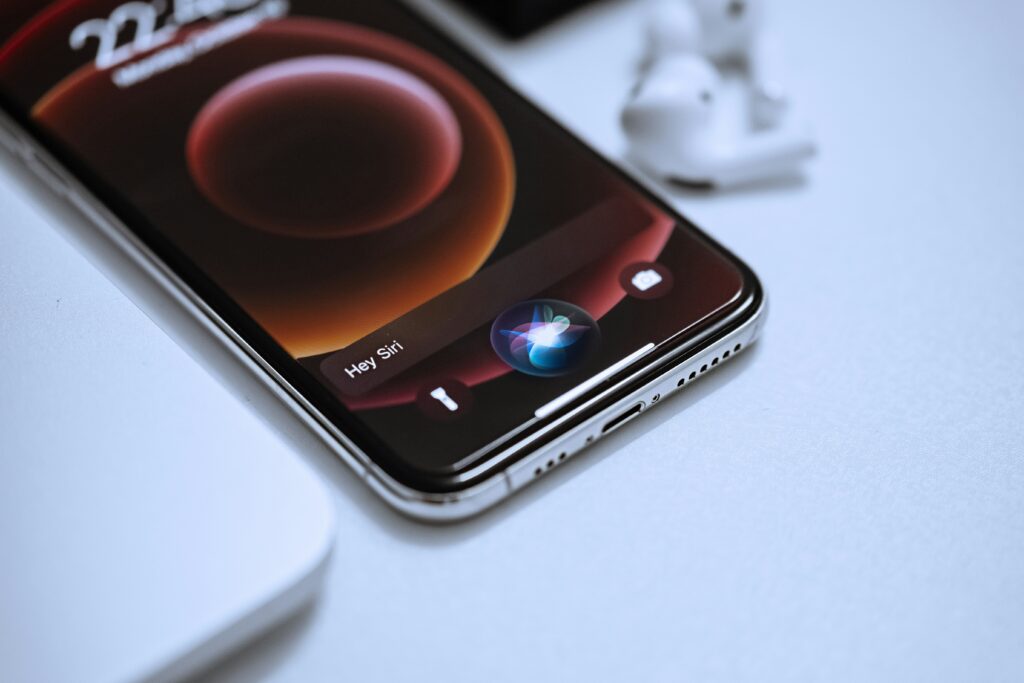
In 2019, UNESCO published a report with that title, taken from Siri’s programmed reply when a user hurled a sexist insult at it. Statistics on gender gaps have a way of washing over people; they arrive pre-mourned, like a forecast for somewhere else. That line does not. Somebody wrote it. Somebody else approved it and shipped it to millions of phones, apparently without hearing what it taught: that a female-voiced helper meets abuse with a simper.
UNESCO’s argument is that the biases people carry through everyday life can resurface in AI systems, sometimes louder than before, which raises the obvious question of who is doing the building. By UNESCO’s count in 2019, women make up 12% of AI researchers worldwide, 20% of technical staff at major machine-learning companies and 6% of professional software developers. Women and girls are four times less likely than men to know how to code, and thirteen times less likely to file for an ICT patent.
That last number is the most telling. The access debate asks who gets to use the tools. The patent figure asks who will own them.
The second half of the sentence
UNFPA makes its case in two halves, and its office in Botswana has been repeating it: girls have a right to the digital world, and a right to be safe in it. The first half is now accepted almost everywhere, at least as rhetoric. The second is where the work is.
The same office tells the story of a woman it calls Tsholo. Looking for work online, she was approached by a woman claiming to be a fellow Motswana working abroad, who offered to introduce her to an ‘agent’. She clicked the link and, within moments, lost control of her accounts; intimate images she had thought private were now in a scammer’s hands, along with a price for keeping them that way. She warned her family, deleted her accounts and tried to vanish. The scammers eventually went quiet. The fear did not, and it drove her offline entirely.
UNFPA’s Executive Director, Diene Keita, has noted that many adolescent girls now say they ‘expect’ digital violence, and warned that pushing girls offline for their own protection costs them the skills their futures depend on. Connectivity statistics will count Tsholo as offline. They will not record why.
Then there is UNFPA’s Bodyright campaign, which argues that personal images deserve the protection already given to copyrighted material. That a woman’s photograph should need to borrow the legal standing of a pop song says a good deal about which rights the internet was built to enforce.
Denmark is now taking that argument into copyright law. A bill introduced in October 2026 would give people stronger control over realistic digital imitations of their appearance, voice, and other physical characteristics, including AI-generated likenesses, allowing them to demand that unauthorised imitations be removed. It is an unusually concrete answer to a question that digital technology has made rather less theoretical: who owns your face when a machine can reproduce it?
Adjourned until HRC68
The EU’s comment looks ahead to a panel discussion at the Council’s 68th session on the human rights of women and girls in the context of digital technologies, and hopes the initiative will break down silos and yield tangible results. It may well do so. This is how gender diplomacy works: resolutions, panels, general comments, each one a foothold for the next, accumulated patiently across sessions by delegations who may wait years to see a phrase survive into binding language.
The trouble is tempo. Diplomacy moves in sessions, technology in release cycles, and abuse at the speed of a forwarded image. By the time that panel convenes, the systems under discussion will have changed several times over. The inequalities they inherited are likely to look much the same, unless someone decides in the meantime that the second half of the sentence is not optional.
RELATED NEWS