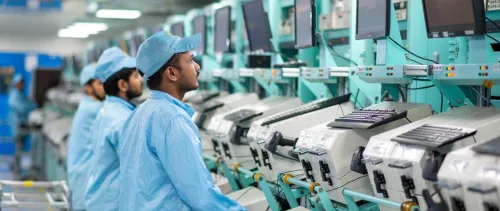

© Shutterstock/Gorodenkoff
Geoeconomics is making global trade and market access more selective, reconfiguring economic interdependence and changing the path to sustainable development.
World trade has held up despite geopolitical tensions, fragmentation and rising financial risks. After reaching a record $35 trillion in 2025, it is on track to grow by around 4.5% in 2026.
But the rules shaping who trades with whom are changing, the latest Trade and Development Report shows.
The UNCTAD report describes this shift as geoeconomics - the use of economic tools to pursue strategic goals.
Governments are increasingly using trade restrictions, financial subsidies, investment rules and technology controls to compete for industries considered crucial to economic and national security, including semiconductors, artificial intelligence infrastructure and clean-energy technologies.
Trade remains global, but its geography is changing
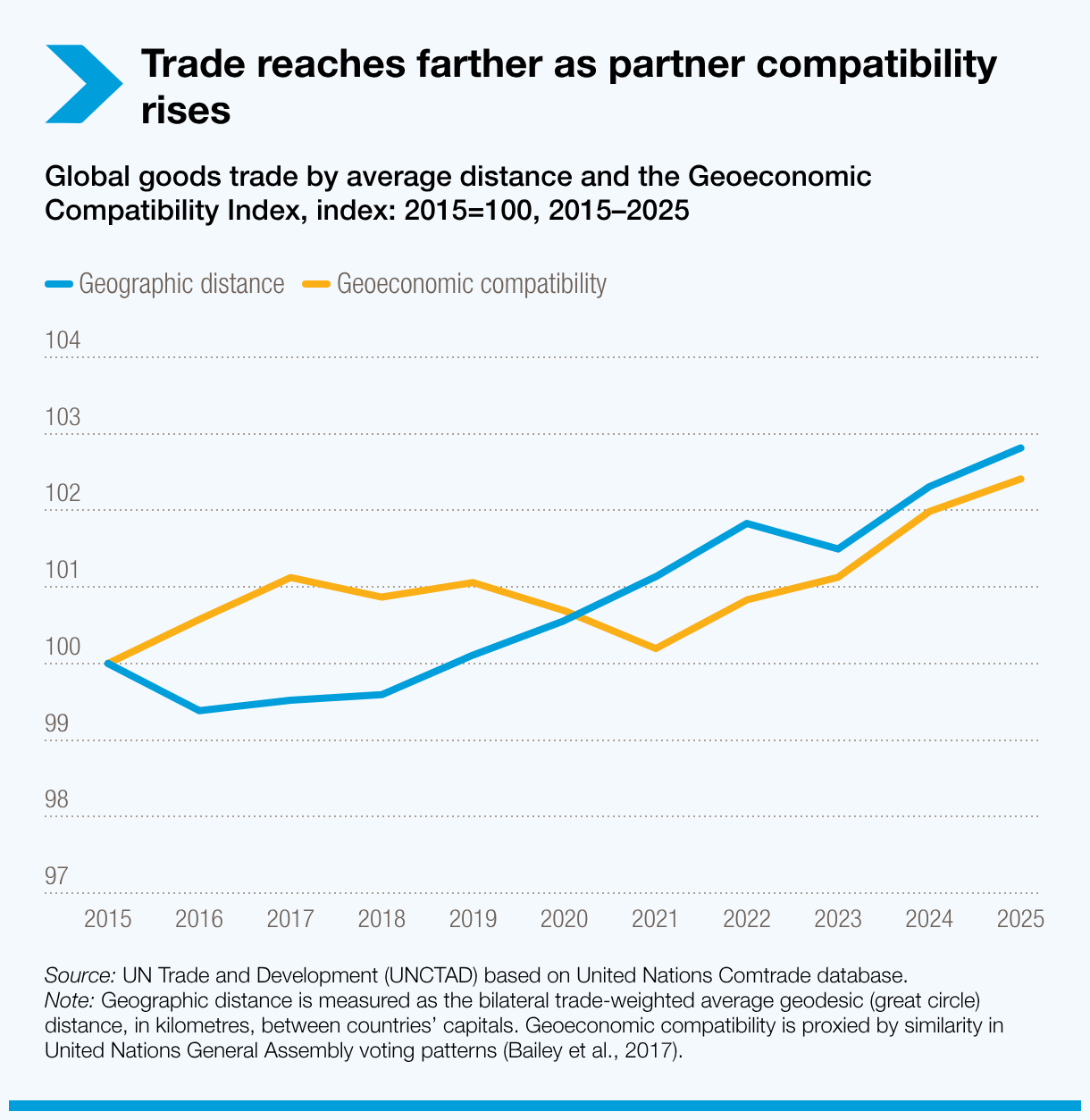
Geoeconomic considerations are increasingly influencing where companies source goods, build production networks and invest.
Strategic relationships, location and perceptions of reliability are becoming more important alongside cost and efficiency.
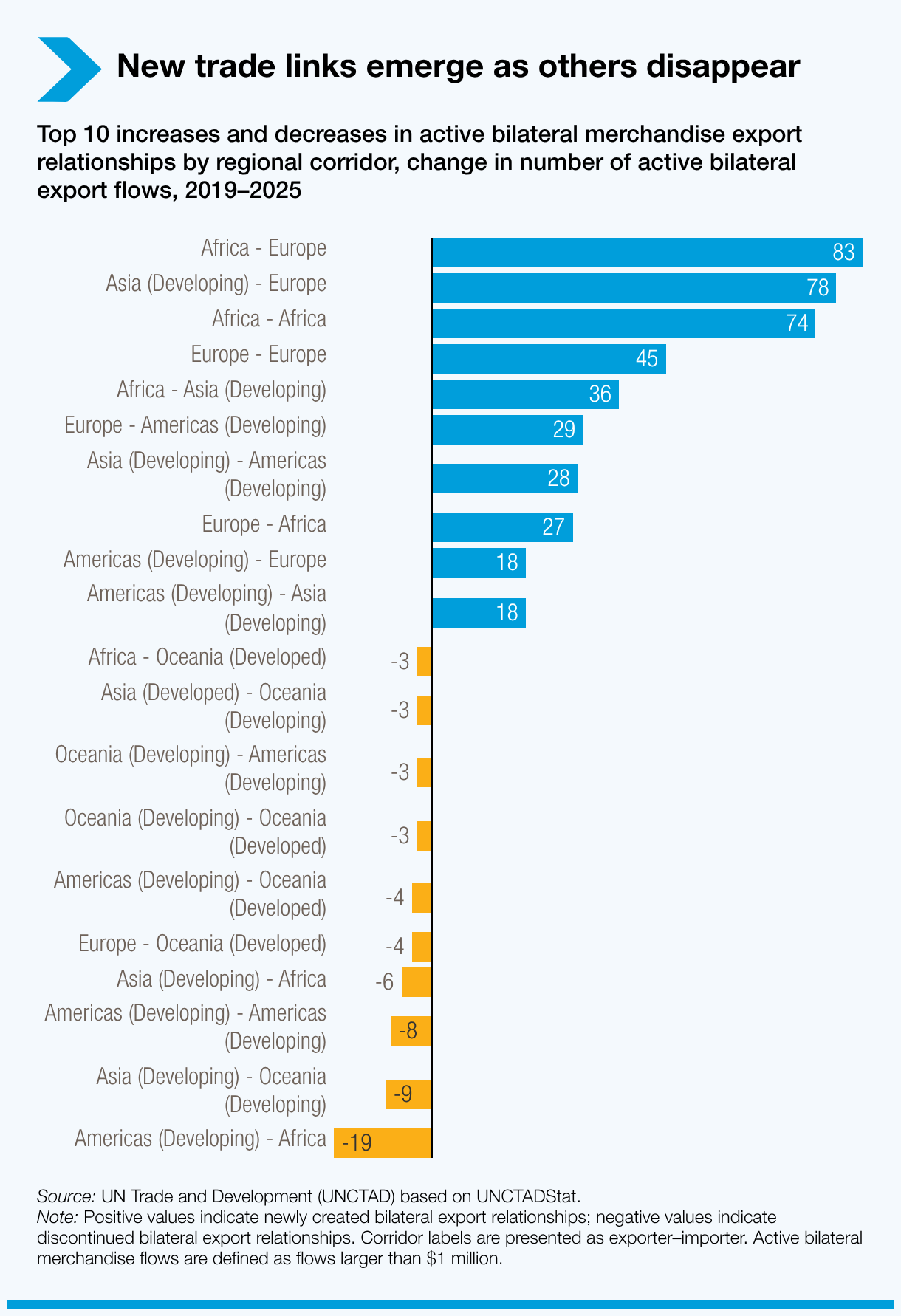
As trade between some major partners has declined, new links have emerged as companies diversify suppliers and production.
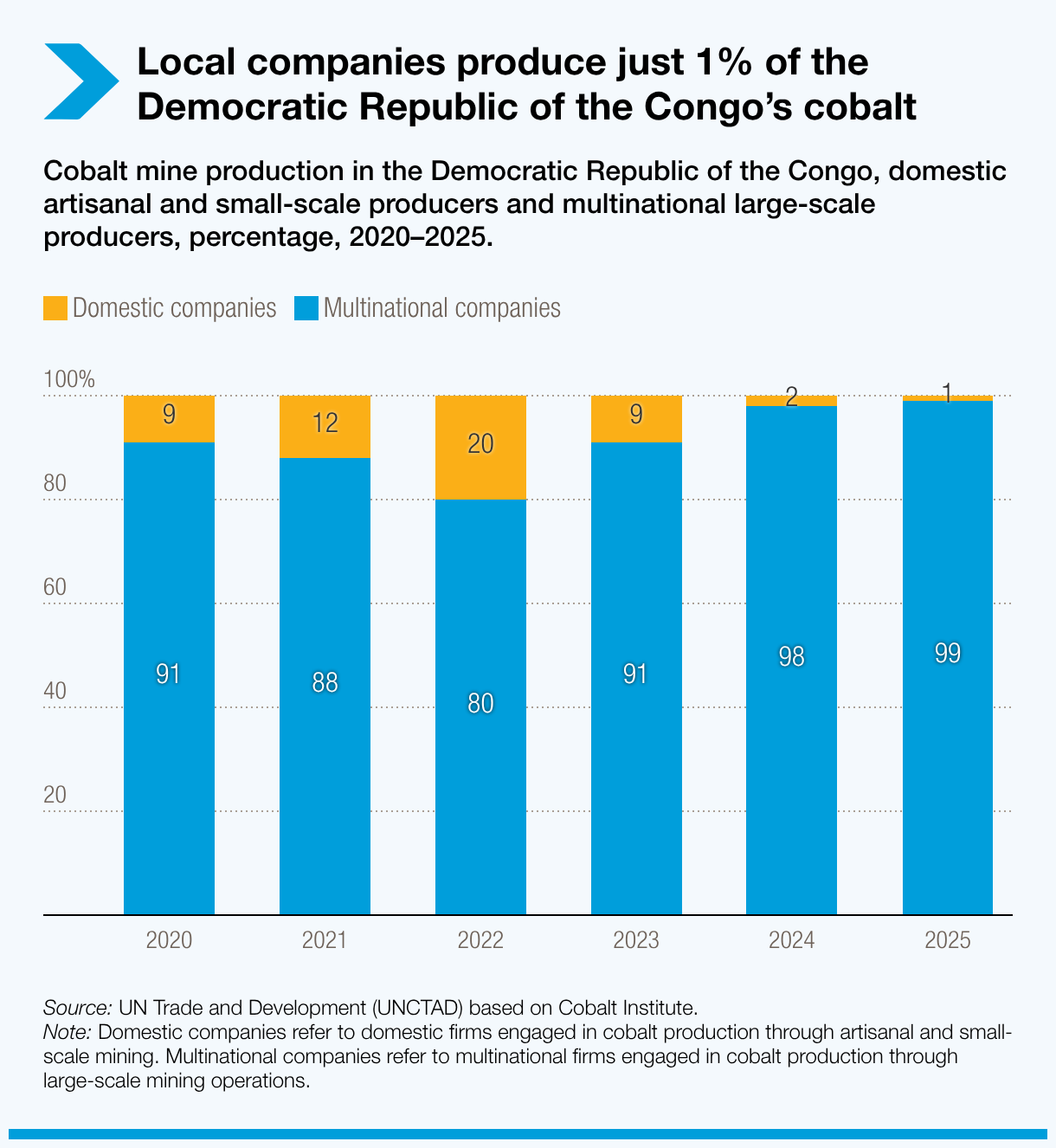
But joining a global supply chain does not necessarily mean capturing much of its value, the report cautions.
The Democratic Republic of the Congo produced about 73% of the world's mined cobalt in 2025, yet domestically owned producers accounted for just 1% of the country’s output. Africa captures less than 1% of the value in green supply chains.
New space for developing economies
The geoeconomic shift can create opportunities for developing economies to become alternative suppliers, production locations or regional connectors.
Countries with large domestic markets, strategic locations and growing institutional capacity can act as regional anchors, connecting markets and building cooperation in trade, technology, infrastructure and finance.
In this regard, the report points to India’s sharing of digital public infrastructure, Brazil’s expansion of its instant payment system across South America, and the Pan-African Payment and Settlement System, which is helping address barriers to cross-border payments.
Such initiatives can complement the multilateral trading system, helping developing economies expand markets, reduce trade costs and strengthen collective bargaining power.
Keeping markets open while building capacity
The report underscores that development safeguards should remain anchored in multilateral rules.
The World Trade Organization remains essential for non-discrimination and basic trade disciplines. Its role should also evolve to address industrial policy, economic security, climate measures and digital regulation.
Where global agreement is difficult, regional and South–South arrangements can help preserve market access and simplify rules of origin.
Developing economies also need support to meet complex market requirements, including standards, certification, traceability, digital customs and regulatory compliance.
Without these capabilities, firms risk exclusion because they cannot meet the rules – despite being competitive.
RELATED NEWS