
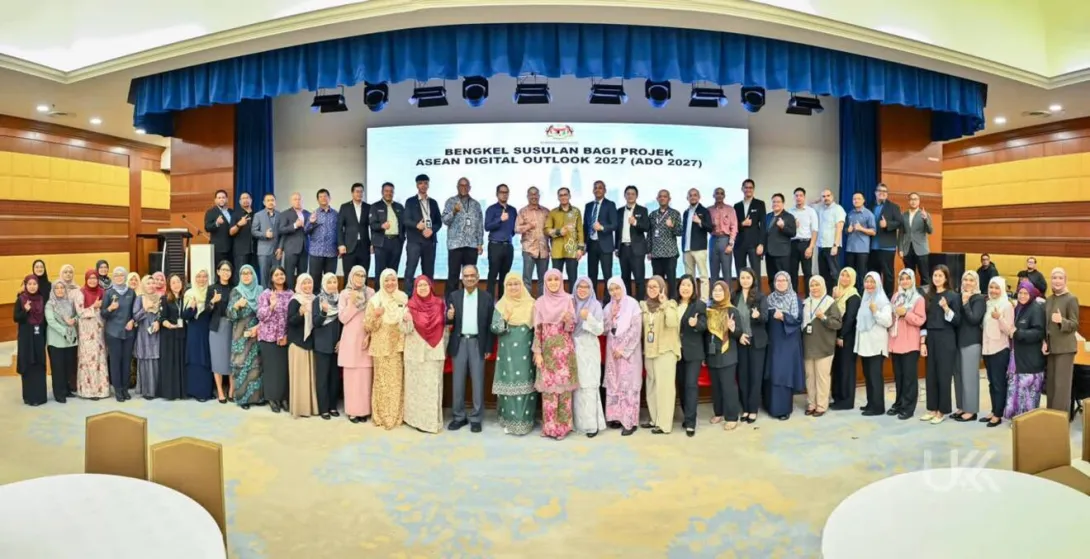
Putrajaya, 7 July 2026: ERIA, in collaboration with Malaysia's Ministry of Digital, convened a virtual follow-up workshop to advance the development of the ASEAN Digital Outlook 2027 (ADO 2027). The session brought together more than 70 policymakers from ASEAN Member States, researchers, and industry representatives to discuss how digital technology adoption can be aligned with human capital development, regional talent mobility, and ASEAN's broader regional integration agenda.
The workshop opened with discussions on aligning ADO 2027 with the ASEAN Digital Masterplan 2030 (ADM2030). Participants examined ASEAN's evolving digital landscape, highlighting the region's transition from technology adoption to higher-value, artificial intelligence (AI)-driven innovation.
During the morning sessions, ERIA experts Venkatachalam Anbumozhi, Lurong Chen, and Randeep Kaur presented insights into emerging technologies and the digital skills required to support ASEAN's digital transformation. Drawing on the Frontier Technology Readiness Index, they highlighted significant disparities in readiness across ASEAN Member States and proposed a comprehensive framework for workforce development. The framework categorises competencies into six skill layers, ranging from basic digital literacy and cybersecurity to advanced AI capabilities and essential soft skills, including critical thinking and ethics.
The discussions also explored policy mechanisms to support regional digital integration, including the implementation of the ASEAN Digital Economy Framework Agreement (DEFA) and the strengthening of Mutual Recognition Arrangements to facilitate cross-border mobility of digital talent.
The afternoon session focused on Malaysia's digital transformation agenda under Malaysia Digital 2030. Representatives of the Ministry of Digital outlined the government's role in promoting digital innovation and creating an enabling regulatory environment, with the goal of increasing the digital economy's contribution to Malaysia's gross domestic product to 30% by 2030. Key initiatives include strengthening digital trust through the Cyber Security Act 2024 and Data Sharing Act 2025, establishing sovereign AI cloud capabilities through the National AI Office, and supporting workforce development and small businesses through AI and cybersecurity upskilling programmes and targeted tax incentives.
The workshop concluded with a shared commitment to deepen regional co-operation and ensure that empirical research, evidence-based policymaking, and national digital strategies continue to support the development of an inclusive, resilient, and globally competitive ASEAN digital economy.