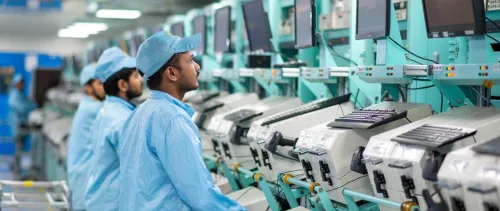

© World Bank/Tom Perry | University students in Tonga enjoy high-speed internet.
- Digital access is no longer enough.
- The digital economy is expanding fast, but gains remain uneven.
- Practical cooperation will shape the next phase.
From 6 to 10 July 2026, Geneva brings together major United Nations discussions on digital cooperation and artificial intelligence (AI), including the World Summit on the Information Society Forum, the AI for Good Global Summit and the first session of the UN Global Dialogue on AI Governance.
For developing countries, the central question is no longer only how to expand digital access, but how to turn that access into productive capacity, competitive firms, quality jobs and new trade opportunities.
A fast-growing digital economy, uneven gains
The scale of the digital economy has changed sharply. Global e-commerce now exceeds $28 trillion, while digitally deliverable services account for 56% of global services exports, but only 16% in least developed countries. That gap shows why digital transformation is not only a technology issue, but a development issue.
From access to productive capacity
The challenge is not only connectivity, but what countries can do with it. Many developing countries, particularly the least developed, still face gaps in infrastructure, skills, finance, regulation and institutional capacity. The risk is that AI and data-driven markets widen existing divides unless countries can capture more value from digitalization.
UNCTAD’s role in Geneva’s digital week
UN Trade and Development (UNCTAD) is helping anchor the development dimension of Geneva’s digital week. It co-organizes the World Summit on the Information Society Forum, chairs the United Nations Group on the Information Society in 2026, and contributes to the UN Global Dialogue on Artificial Intelligence Governance. It also co-leads, with the UN Industrial Development Organization (UNIDO), work on inclusive digital economies under the Global Digital Compact, helping translate global commitments into practical support for countries.
Through its work on e-commerce, digital trade, data governance and the digital economy, UNCTAD supports countries in identifying practical policy options suited to their needs and priorities.
eTrade for all shows the practical route
The eTrade for all partnership offers a concrete example of a partnership that has grown to 35 organizations and helps developing countries translate digital policy priorities into practical reforms. During the week, UNCTAD, which hosts the secretariat of the initiative, will mark its 10th anniversary , offering a moment to take stock of progress made and consider how international digital cooperation, must evolve to meet the opportunities and risks of the future.
Over the past decade, the initiative has help connect countries with technical assistance across seven policy areas of the digital economy, supported 41 eTrade Readiness Assessments which are now moving increasingly from policy diagnosis to implementation, including through the eTrade Reform Tracker, which helps countries monitor progress on digital economy reforms.
The next test: turning digitalization into development gains
Closing the digital divide is no longer only about infrastructure and connectivity. It is about whether developing countries can use digital tools and AI to build productive capacity, support local firms, create quality jobs and expand trade opportunities, including for women.
Partnerships like eTrade for all show what practical cooperation can look like. Scaling that support will help determine whether the AI-driven phase of digital transformation is more inclusive than the last.
RELATED NEWS