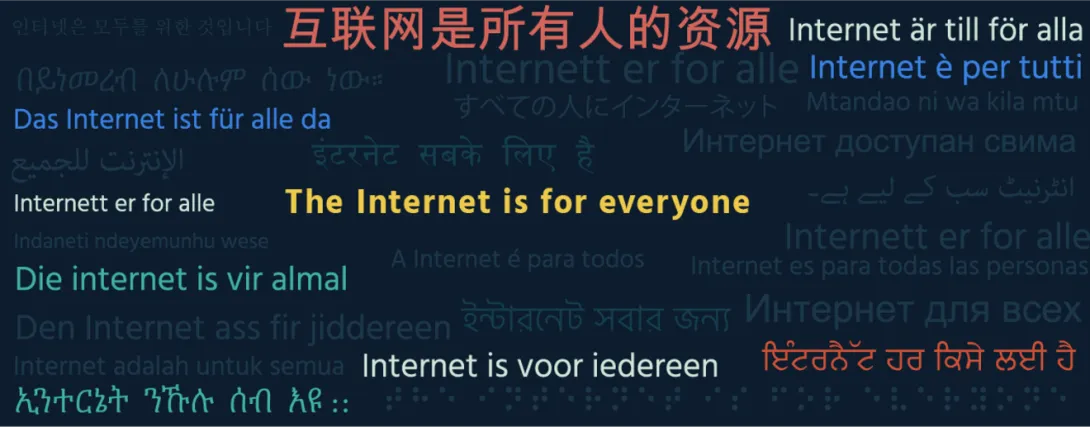
For the Internet to truly be for everyone, people need to be able to access information in their own language. People can learn more, engage more, and be safer online—if they can fully understand the information they are reading and seeing online. However, of the over 7,000 languages spoken around the world, most information is only available in a few languages.
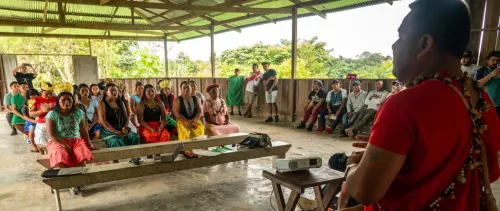
This has been a concern for the Internet Society for decades. Our global network of over 120 chapters has provided a significant part of our response, with volunteers building local communities that engage in local languages. Our community-centered connectivity projects and work with Indigenous communities have helped communities bring their languages and culture online. The Internet Society Foundation has been funding projects and research to increase information in less common languages. And in 2025, we were one of the founding members of the Coalition on Digital Impact (CODI), whose mission is to ensure that everyone can navigate the Internet in their own language.
In 2026, with generative artificial intelligence (AI) systems increasingly being used by people around the world, this language divide is only deepening. People using less common (sometimes called “low resource”) languages cannot participate and use the AI systems that so many others are using.
Many of these communities speaking less common languages suffer an even greater challenge of not having affordable, reliable, and resilient Internet connectivity. While so many people rush to use the latest AI systems, we cannot forget that around 2.2 billion people have no Internet access at all, and some percentage more cannot afford the available connectivity. Not having information or services in their own language only increases their challenges with getting online.
To address this language divide, today we are joining with the Gates Foundation and 59 companies and organizations in a joint commitment to help ensure that AI services are available in many more languages. As the Gates Foundation states in their 2026 Goalkeepers Report:
Most of the world is invisible to today’s AI models. These AI systems were trained primarily on what exists on the Internet—and the Internet reflects a deeply unequal world. More than 90 percent of the data used to train early, large language models came from English-language sources.
An important part of why we are joining this commitment is that it is not just about making tools available in new languages—it is about grounding these services in local open data and reflecting local realities—and is a natural extension of our work.
There is a motto within the disability community of “nothing about us, without us,” and that applies equally here as well. AI systems and services must bring value to communities, not merely extract value from them. And language communities should also have the option to not have their languages included in AI systems if that is their choice.
This shared commitment between organizations announced today focuses on a five-year goal: for an estimated 3.4 billion people who speak languages currently underrepresented in today’s AI models to be able to use AI tools in their own language and voice.
We look forward to working with all the organizations to bring about this reality—and to also ensure that this work reflects that for any of these AI systems to work, people need to have affordable, reliable, and resilient Internet infrastructure, and the work needs to be based on open and trustworthy technologies, including open standards.
We believe the Internet is for everyone—and everyone should be able to access and use services on the Internet, ideally in their own language.
—
P.S. In full disclosure, I am also a member of the CODI Board of Directors, and CODI has also signed on to this commitment.
Disclaimer: Viewpoints expressed in this post are those of the author and may or may not reflect official Internet Society positions.