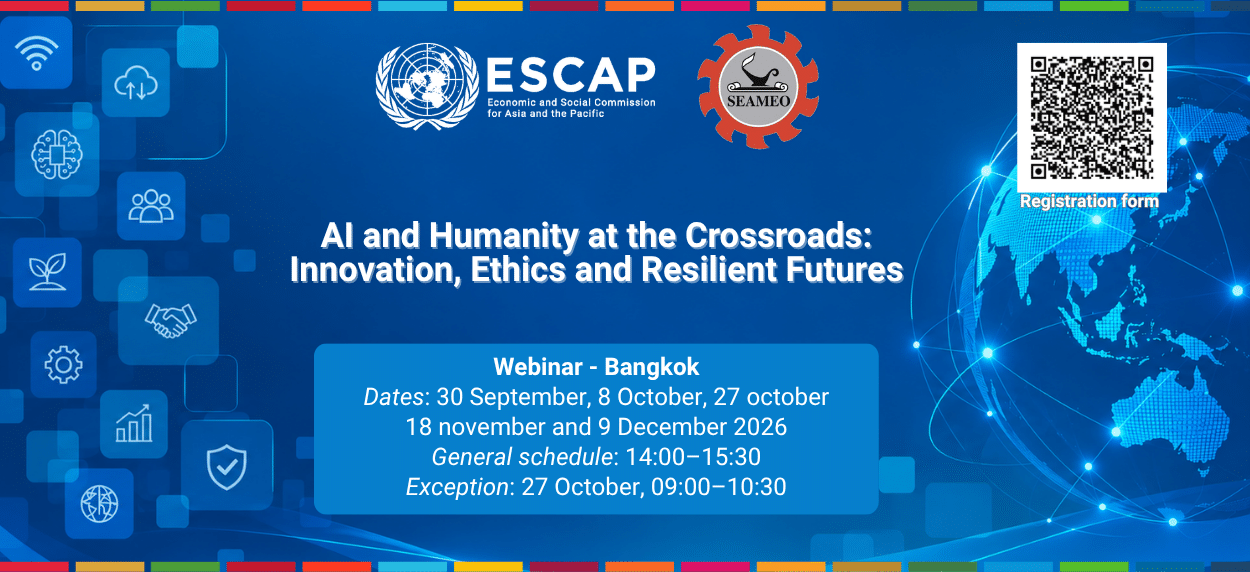
AI and Humanity at the Crossroads: Innovation, Ethics and Resilient Futures
Context
The world stands at a critical juncture as rapidly evolving Artificial Intelligence (AI) reshapes the foundations of society. Developing effective AI governance is an urgent priority that demands multinational and multistakeholder collaboration to establish frameworks capable of strengthening organisational capacity at all levels. Increasingly, AI governance is recognised as a shared responsibility, grounded in principles of co-governance that foster alignment, harmonisation, and adaptability across diverse norms. At the same time, it must ensure responsible practices by embedding ethical considerations at the core of its design and implementation.
Equally urgent, if not more critical, is preparing for AI’s impact on the intellectual and social development of future generations. AI-powered tools can promote personalised learning, expand access to educational resources, and support educators in lesson planning and assessment. While these innovations may offer at least partial solutions for diverse educational pathways and more inclusive opportunities, automatic reliance on technology exposes learners to significant risks and unintended consequences. Students could encounter misinformation, bias/stereotyping, privacy violations, exposure to harmful or violent content, algorithmic opacity that makes it difficult to verify outputs. Research across continents further indicates that excessive dependence on AI can erode cognitive skills, particularly critical thinking, memory retention, and metacognitive awareness.
Given such profound effects on learners, especially in their social and emotional development, the vital role of educators is clearer than ever: to guide a balanced approach to technology use. This is because our shared mission as education stakeholders is to integrate AI in ways that enhance learning without displacing essential human judgment and interaction.
As we continue to witness global disruptions driven by multiple conflicts worldwide, a pressing question emerges: how can we balance innovation with wisdom in education to build sustainable futures? This is no longer a task of educators alone; all stakeholders need to collaborate to foster dialogue and create spaces that strengthen ethical judgment rooted in the core principles of humanity. Achieving this requires harnessing the potential of AI while safeguarding and promoting human values, ensuring that future leaders are nurtured to work toward peace.
It is in this context the SEAMEO SEPS Virtual Learning Series 2026 will convene five sessions via Zoom (90 mins per session) between September and December 2026. In collaboration with global partners, resource persons will be invited from diverse disciplines and sectors to share transdisciplinary perspectives on the theme, addressing challenges and opportunities in the age of AI. These webinars aim to foster reflection and dialogue across sectors and borders, advancing strategies for AI with sufficiency, innovation and wisdom toward resilient futures.
Objectives
Examine how AI and emerging technologies intersect with humanity, the Sufficiency Economy Philosophy, and global responsibilities to shape sustainable futures.
Promote dialogue on ethical leadership, dignity, inclusivity, and peacebuilding to ensure AI governance frameworks uphold shared human values.
Address the impact of AI on cognitive skills, socio-emotional development, and civic education, while fostering knowledge co-creation and empathy among learners.
Share pathways for responsible innovation that reduce the digital divide, promote equity, and support people-centred development and wellbeing.
Create a transdisciplinary platform for educators, policymakers, researchers, and civil society to exchange perspectives and co-develop strategies for resilient societies.
Target participants
All stakeholders in education across all levels, including policymakers, administrators, educators, practitioners, as well as researchers, students, and the general public.
This link will take you to the event’s main page: SEAMEO SEPS
for more information, please contact
Subregional Office for South-East Asia + 66 22 88 2902 [email protected]