
This year's World Post Day theme, "One postal network, infinite possibilities," captures a truth the sector knows well: Post is so much more than letters and parcels. With more than 660,000 post offices worldwide, the Post is often the only public institution within reach in rural and remote areas and is backed by generations of trust built between staff and the communities they serve. Governments are increasingly leveraging this asset to extend essential digital services to the 2.2 billion people who remain offline, opening new financial sustainability pathways for postal operators.
That combination of reach and trust matters most for the people digital transformation tends to leave behind – rural communities, women, MSMEs, the elderly and other vulnerable populations – who are increasingly expected to move to online banking, health and government services. A properly connected post office can offer a stable internet connection and a helping hand to enroll for a digital identity, receive digital payments, or access official communications securely. For governments, this can be the difference between simply offering services online and making them accessible to everyone.
This is where the Post's real potential lies: as a delivery channel for digital public infrastructure (DPI) – the interoperable services that enable people to participate in the digital economy. McKinsey Global Institute research shows that good digital ID alone could unlock economic value equivalent to 3 to 13% of GDP by 2030 in just seven countries studied, yet access remains uneven.
UPU research shows postal operators are well positioned to close that gap. While an estimated 90% already offer some form of financial services, the UPU’s digital panorama covering 153 countries shows 58% provide digital financial services and just over half offer e-government services such as digital ID. There is plenty of room to grow – and for operators, these services bring new revenue at a time when real postal revenues declined globally for the third consecutive year.
There are already examples of governments using the postal network to deliver wider national priorities.
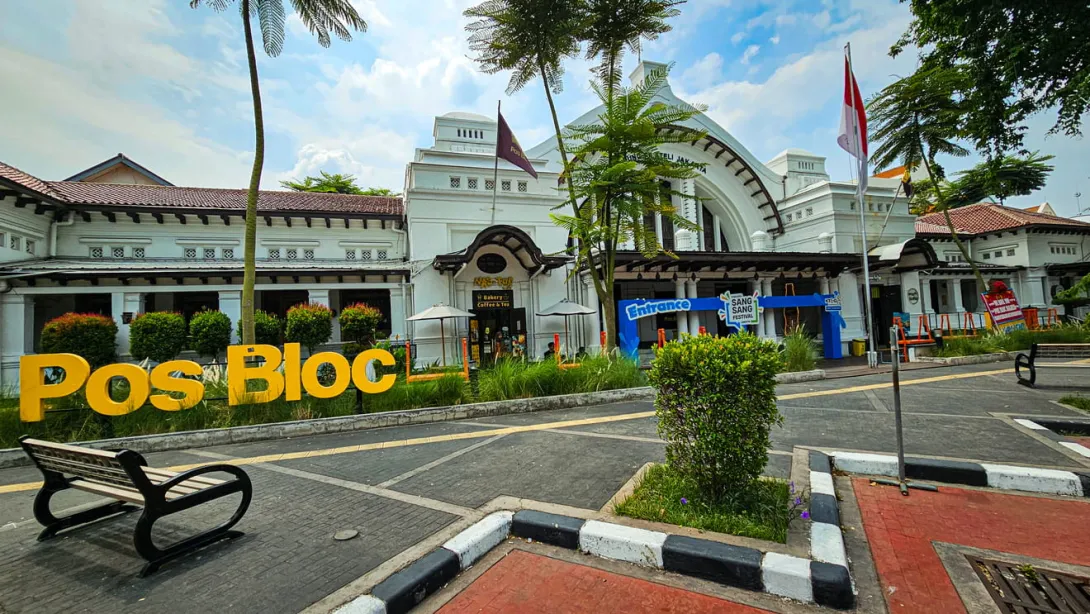
Indonesia demonstrates how significant this opportunity can become. In 2022, financial services accounted for 23% of Pos Indonesia's total revenue, compared to 8% from traditional postal services. Its cash-on-delivery service generated 4.5 million transactions totaling IDR 780 billion (USD 43.8 million), connecting suburban and rural customers to the payment solutions to access e-commerce services. The Post’s 200 community collaboration centres connect MSMEs with the digital tools they need to succeed in the online market.
What governments need to do
Governments need to do three things to unlock this potential globally.
First, governments need to recognize the Post as a national service-delivery asset and a trusted policy tool for the digital age, not simply a traditional delivery service or the sole responsibility of the postal ministry. Ministries responsible for finance, social protection, health, digitalization, agriculture and MSME development should work with the postal ministry to identify where the postal network can help them reach citizens and businesses more effectively and support their own digital agendas. Using this existing infrastructure can help cut costs and speed up the rollout of new initiatives.
Second, governments need to ensure the postal network is digitally ready, starting with connectivity. The digital panorama found that nearly 1 in 6 post offices is still disconnected from the internet – concentrated precisely where the inclusion gain would be greatest: rural areas and low- and middle-income countries. Once online, a post office can serve as a one-stop shop for digital payments, identity, addressing, secure government-to-citizen communication and more.
Third, policy needs to make room for innovation. In many countries, legislation restricts what services the Post can offer, with banking and health being common friction points. Updating these rules, paired with funding and technical support, is what turns a connected post office into an active service point.
Where the UPU comes in
As the UN specialized agency for the postal sector, the UPU advocates directly with governments – including digital, finance and health ministries that rarely hear from postal authorities – in the forums where inclusion policy gets set.
Our support starts before a service is launched. We help member countries assess postal readiness, identify viable business and partnership models, support regulatory dialogue, build capacity and mobilize resources, technical assistance or investment.
Connect.Post brings governments, operators and private partners together to digitize the network, aiming to connect every post office in the world to the internet by 2030. TradePost lowers barriers for MSMEs to reach new markets through postal-enabled e-commerce. The Financial Inclusion Technical Assistance Facility (FITAF) and its sister Postal Insurance Technical Assistance Facility (PITAF) help deliver digital financial and insurance services; FITAF alone has supported 20 projects and engaged 5.3 million underserved postal customers, including 3.1 million women.
The UPU can provide the tools, expertise and partnerships, but lasting transformation must begin nationally. It takes a postal operator ready to innovate and a government willing to see the Post as a partner in delivering its priorities. When the two come together, the postal network becomes much more than a channel for letters and parcels: it becomes a platform for financial inclusion, public services, digital participation and economic opportunity. That is where the “infinite possibilities” begin.
Contact us today to learn more about how you can:
- Help digitize your postal network: connect.post[at]upu.int
- Support MSMEs in your country: tradepost[at]upu.int
- Implement digital financial services: pfs[at]upu.int
- Use your network to drive financial inclusion: financialinclusion[at]upu.int
- Deliver social services via postal infrastructure: sustainability[at]upu.int
Radka Sibille
Digital Policies and Trade Coordinator, UPU
Sergey Dukelskiy
Sustainability and Financial Services Coordinator, UPU