
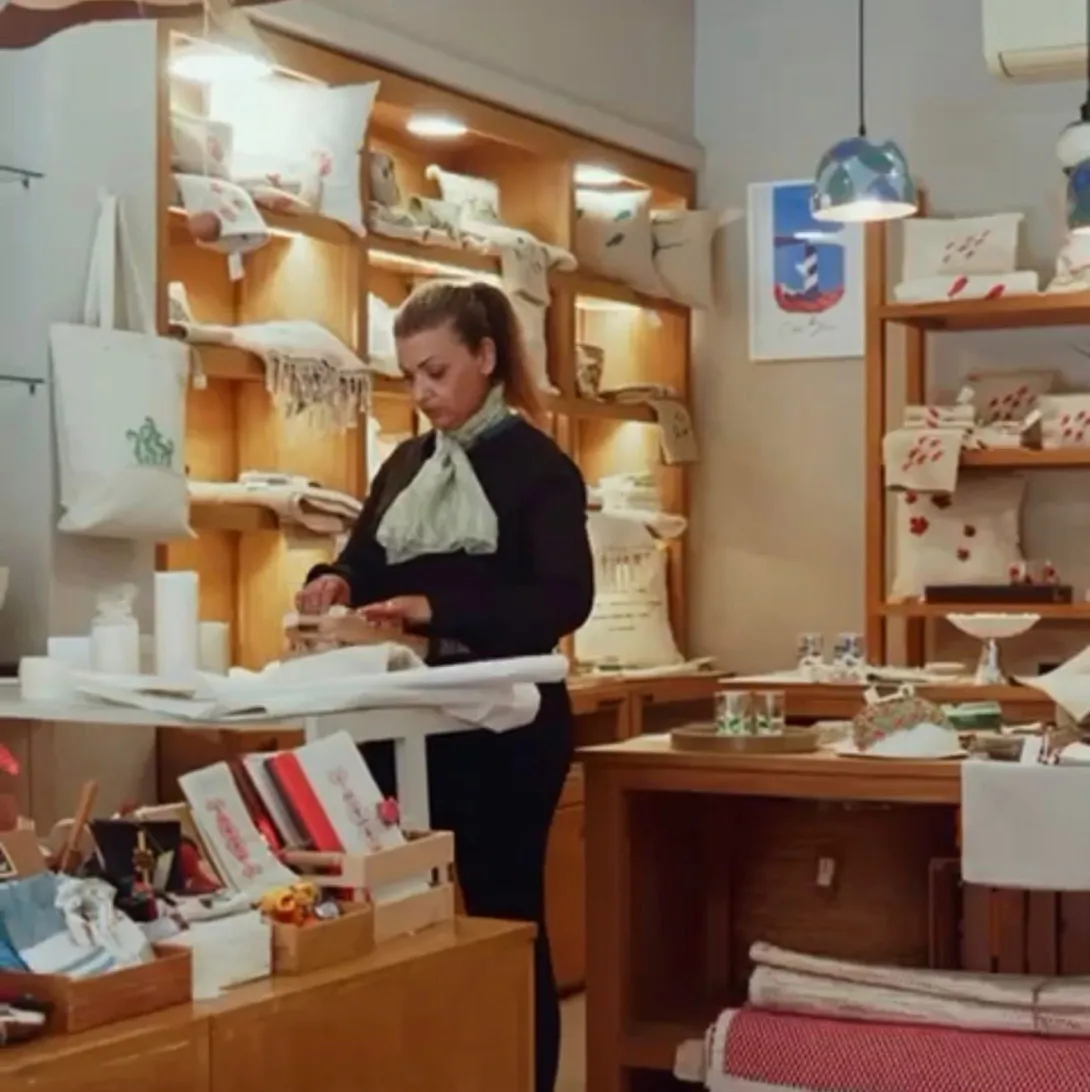
During International Women’s Month, the Universal Postal Union is highlighting how postal networks support micro, small and medium-sized enterprises (MSMEs), including women entrepreneurs seeking to reach international markets. As part of these efforts – and ahead of the launch of its Heya initiative supporting women-led businesses – the UPU spoke with Tunisian artisan Héla Chadi, whose experience shows how postal services can help connect local craftsmanship with global customers.
“Craftsmanship is not only a passion. It can become a real business and a way to share a unique know-how with the world,” says Chadi, founder of Socadeco.
When Chadi began creating handcrafted decorated textile pieces inspired by Tunisian heritage, her ambition was to transform her passion into a business capable of bringing her craft to a wider audience.
Today, as founder of Socadeco (Société de confection d’accessoires et de décoration) and the Cerise brand, she is gradually bringing her vision to life. Her creations – made from natural materials such as linen, cotton and plant fibres – combine aesthetics and functionality. The embroidered motifs draw inspiration from Tunisian and Mediterranean heritage, with a contemporary touch.
The company also works with women artisans in different regions of Tunisia, helping them strengthen their autonomy and develop their own production activities.
Balancing creativity, entrepreneurship and family responsibilities
Like many small entrepreneurs, Chadi began with limited resources and modest working capital. Finding the right market, investing in communication and reaching new customers were all early hurdles.
“One of the main challenges was identifying the right market for my products,” she recalls. “With limited funds, it was difficult to invest in communication or reach new clients.”
As her business developed, expanding beyond the local market became essential. International customers opened new opportunities to showcase Tunisian craftsmanship, but they also brought new constraints, particularly in meeting production demands and ensuring consistent access to materials.
Running a small business also means balancing multiple roles.
As a woman entrepreneur and artisan, it means wearing several hats,” she explains. “In my case, I must be creative, constantly innovating to develop new products, stand out and keep prices accessible. But that is not enough: I must also be a skilled manager and strategist, ensuring the financial balance of the business.”
For many women entrepreneurs, this balancing act extends beyond the workplace.
“The main challenge is often the mental load of reconciling professional responsibilities with family life,” she says. “But it is also what builds resilience.”
The postal network as a gateway to global markets
Reliable logistics are another key factor for artisans seeking to reach customers abroad. For Chadi, the postal network has long played an essential role in enabling this connect.
Because her products are generally lightweight and compact, she has relied primarily on the Tunisian Post’s services to ship orders internationally.
“The items I produce are usually light and not very fragile,” she explains. “Air transport is the most suitable option to ensure deliveries are both fast and reliable.”
Her awareness of new export opportunities grew during seminars organized by the Post at a national craft fair, where she learned about the Easy Export initiative, designed to help small businesses access international markets more easily through postal services.
“In the craft sector, transport costs are often a real barrier,” she notes. “Customers hesitate to place orders when shipping costs are too high.”
Her products sometimes compete directly with similar items from other Mediterranean countries where shipping costs are lower or already included in the final price.
“When transport costs are added separately, it can make the purchase less attractive,” she explains. “Making postal services more accessible and affordable helps artisans stay competitive in international markets.”
Supporting the next step for women entrepreneurs
Chadi’s experience also highlights the kind of practical support that could help many artisans take the next step toward international trade. Training on export procedures, e-commerce and digital tools would make it easier for small businesses to navigate international sales.
“Many artisans have strong know-how,” she says, “but they lack clear information about export procedures, administrative requirements or pricing for international markets.”
She also sees value in collaboration with students or young professionals who could strengthen digital communication, support the development of online sales platforms, and improve product visibility.
Simple digital tools that allow shipping costs to be calculated and integrated directly into online sales platforms could also make purchasing easier and more transparent for customers.
Equally important, she says, are opportunities for women entrepreneurs to exchange experiences and learn from one another.
“Advice from someone who has already developed export activities can help us avoid mistakes and move forward faster,” she notes.
As her company grows, Chadi hopes to reach more international customers while remaining faithful to the values that define her work: quality, creativity and authenticity.