
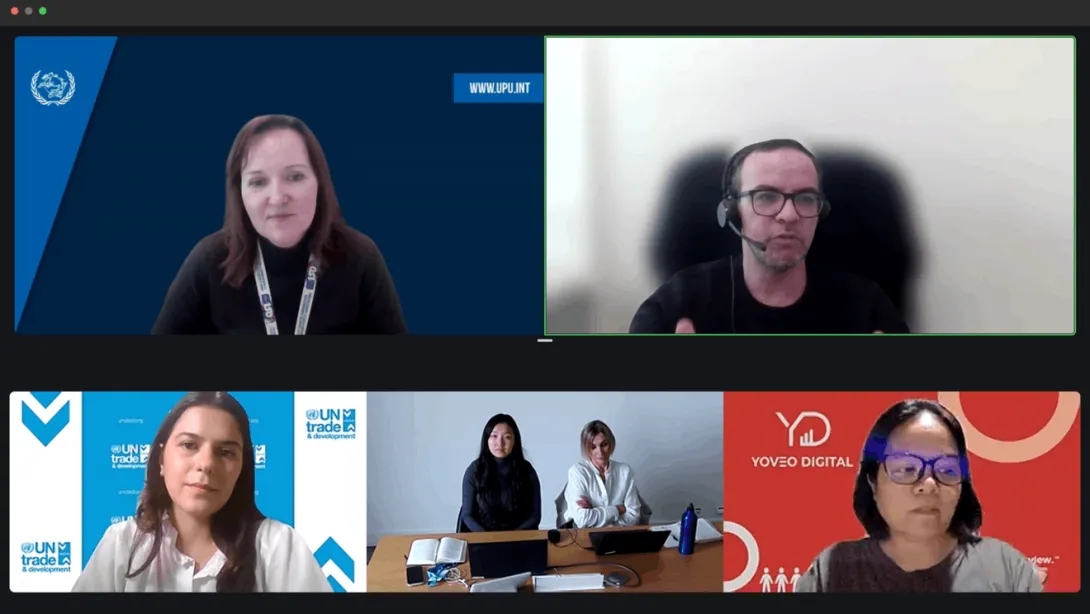
The UPU presented findings from its recent research on the power of the postal network to include women small business owners during UN Trade and Development's (UNCTAD) latest "eTrade for Women" network briefing on 10 March.
During the call, which was open to women entrepreneurs across the globe, UPU Digital Policies and Trade Coordinator Radka Sibille shared highlights from the organization's latest Digital Panorama report that underscore the shift in converting post offices into one-stop-shops for inclusive digital services.
The report found that:
- 71% of Posts promote economic inclusion through e-commerce services;
- 58% of Posts promote financial inclusion through digital financial services;
- 51% of Posts promote social inclusion through e-government services; and
- 70% of Posts directly contribute to bridging digital divides through provision of at least one digital connectivity service.
"Posts already have an extensive retail presence, so the infrastructure is already in place to support MSMEs, particularly in rural and remote areas," explained Sibille.
In addition to their reach, Posts have a unique advantage in that they offer "multi-channel service delivery" that gives people a choice of receiving digital services through both fully digital and in-person digitally enabled options at postal counters or through delivery staff. The in-person channel is particularly important for less connected groups that often lack digital skills, offering them hand-holding support during digital transactions.
While Posts are making significant strides in closing the digital gap, many still face barriers to maximizing their potential, Sibille explained.
Supportive UPU programming
The UPU is working with governments and development partners to strengthen the role of postal networks in supporting inclusive digital trade and helping MSMEs access global markets.
Through its Connect.Post programme, the UPU is working to connect every post office to the Internet and leverage that connectivity to deliver digital services that support e-commerce, financial inclusion and access to government services.
The initiative is currently helping extend connectivity to rural post offices in countries like Ethiopia and Kyrgyzstan, enabling underserved communities to access online services. It is also supporting the creation of postal data centres in Madagascar and the establishment of digital access points and e-commerce support centres in Small Island Developing States in the Caribbean.
In parallel, the UPU SME Growth and Trade Expert Houssem Gharbi explained how the UPU’s TradePost programme works with postal operators and trade partners to simplify export procedures and reduce barriers that prevent small businesses from participating in cross-border e-commerce.
In Tunisia, under the TradePost’s previous iteration, the UPU supported the creation of 12 one-stop shops for MSMEs, where postal staff were trained to guide businesses through export procedures. The project reduced export processes by 50%, resulting in a 360% increase in MSME shipments within one year. The initiative also led the Tunisian government to establish a special regime for postal e-commerce shipments.
Women-specific support
Building on these efforts, the UPU is preparing to launch a new initiative focused specifically on women entrepreneurs.
The programme, called “Heya” – meaning “she” in Arabic – will support women-led MSMEs by bringing postal services and e-commerce support closer to underserved communities.
The initiative will introduce mobile post offices that collect e-commerce parcels while providing digital and financial services to women in remote areas. Belize will be the first country to pilot mobile post offices under the programme in 2026.
Heya also foresees the creation of e-commerce collaborative centres in post offices, where women entrepreneurs can access training, digital tools and spaces to showcase and stream their products online.
During the eTrade for Women briefing, participants expressed strong interest in expanding programmes such as Connect.Post, TradePost and Heya in their own countries. Women entrepreneurs highlighted the need to reduce export barriers, improve access to affordable financial services and adopt sustainable e-commerce practices.
The UPU reaffirmed its commitment to working with member governments and partners to ensure postal networks can provide the services women entrepreneurs need to succeed in the global digital economy.
Read more about how Posts around the globe are including vulnerable and overlooked populations in the digital economy in “The postal sector’s role in the digital economy and digital society – a global panorama”.