For small businesses, e-commerce offers opportunities to reach new customers, but turning an online presence into a sustainable business requires more than access to a digital marketplace. Entrepreneurs need practical knowledge to navigate online platforms, develop their businesses and manage the delivery of their products.
In Ukraine and Türkiye, postal operators are helping entrepreneurs acquire these skills through training and capacity building, complemented by practical support that enables them to participate more effectively in the digital economy.
Turning knowledge into business opportunities
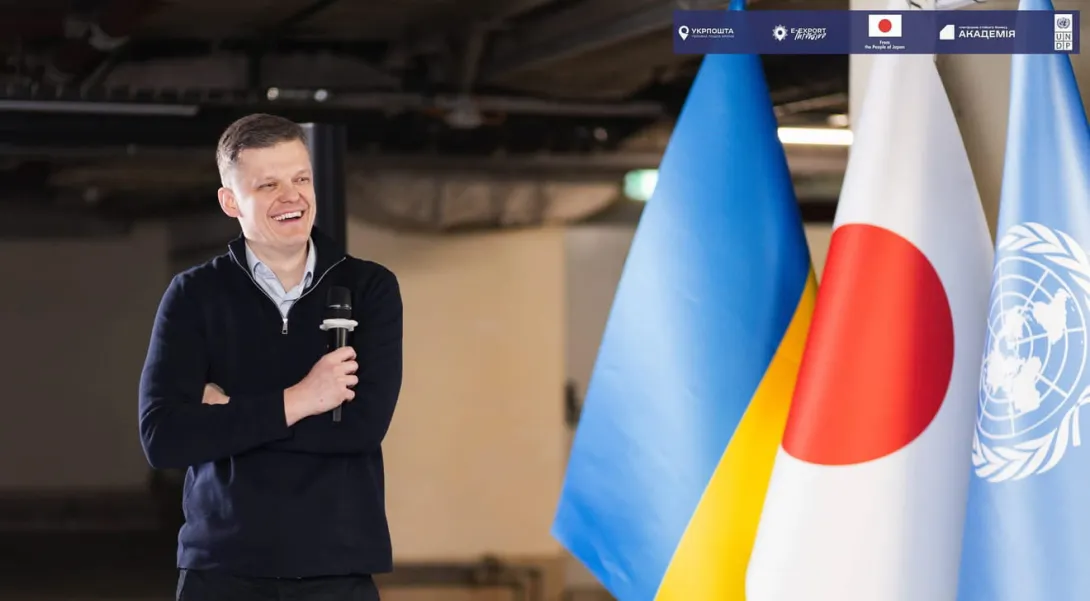
Established in 2016, Ukrposhta’s E-Export School helps Ukrainian entrepreneurs enter international e-commerce through practical training, guidance and opportunities to learn from experienced sellers.
For Maksym Gopanchuk, founder of KGUmusic and MG Leather Work, the journey began in 2012, when he started selling accessories for wind instruments on eBay. His business generated only a few dozen sales each month, and he lacked the knowledge to expand it.
“Before E-Export School, we didn’t know how to scale sales,” he recalls. “After studying at E-Export School, we saw that other participants were launching successful projects, so we began to think strategically about how to scale our business.”
Through the programme, Maksym learned how to establish online stores and use digital marketing tools more effectively. He also gained practical insights from other entrepreneurs.
“The most valuable part was the community that E-Export School brought together,” he says. “In the hall there were fellow entrepreneurs, and during coffee breaks we could talk and learn a lot from them.”
For Maksym, this exchange of practical experience distinguished the school from the existing support available directly through online marketplaces.
“All marketplaces describe their rules on their websites and have support services, but at E-Export School all presentations were based on real, practical examples,” he explains.
The programme also helped him identify which paid marketplace services and marketing tools were worth investing in – particularly important for a business operating with a limited budget.
Maksym subsequently expanded his sales through Shopify and developed a new product line of handcrafted leather gig bags for musicians, using the school’s training to establish a presence on Etsy. Today, his businesses sell through multiple online stores and collaborate with internationally recognized musicians.
Supporting entrepreneurs beyond training
“Entrepreneurs planning to start exporting are most afraid of bureaucratic procedures in other countries, legal requirements for starting a business, customs regulations and certification,” says Julia Pavlenko, who initiated the E-Export School and serves as Director of the International Operations Department at Ukrposhta. “Sellers with 3 to 5 years of experience name competition as the biggest challenge, since dealing with it requires a significant marketing budget.”
Research (available in Ukrainian only) cited by Ukrposhta and its partners found that 58% of potential exporters did not know where to start, while 71% said they would begin if they had a step-by-step guide. To help address these needs, Ukrposhta and its partners developed three practical guides on setting up and operating stores on popular online marketplaces.
But training is only part of the equation.
“Training is important, but so is the product – delivery by Ukrposhta,” says Pavlenko.
Ukrposhta is continuously working to improve delivery quality and speed, which includes ensuring compliance with customs requirements. According to Ukrposhta, timely preparation for the new customs rules introduced in the United States in August 2025 and the European Union in July 2026 enabled Ukrainian businesses to continue shipping commercial orders to both markets without interruption.
For entrepreneurs such as Maksym, combining practical knowledge and peer learning with postal services can help turn occasional online sales into more established international operations.
Expanding opportunities for women entrepreneurs
In Türkiye, PTT and its e-commerce subsidiary, PttAVM, are helping women entrepreneurs and women’s cooperatives bring their products to digital markets. Launched in 2020, the “Increasing Women’s Participation in E-Commerce Project” combined free training in digital marketing, customer behaviour, product listing and sales optimization with technical assistance and preferential commission rates on PttAVM, helping participants establish and manage online sales.

Following the project’s completion, PTT and PttAVM have continued to support women entrepreneurs and women’s cooperatives through initiatives carried out with the Ministry of Trade. Under the “Protocol on Supporting Women’s Cooperatives through E-Commerce”, cooperatives can bring their packaged and barcoded products to consumers through PttAVM. Dedicated categories, homepage banners, digital catalogues, social media activities and seasonal campaigns increase their visibility, while product photography and branding support help them present their products more professionally and competitively online.
Another important initiative is the “Strengthening E-Commerce Project”, coordinated by the Ministry of Trade in cooperation with the Union of Chambers and Commodity Exchanges of Türkiye (TOBB) and the Independent Industrialists and Businessmen Association (MÜSİAD). Implemented in 11 regional hub provinces, with 30 provinces participating in total, the project provides free training to tradespeople, small and medium enterprises, women and young entrepreneurs. PttAVM provides practical training in online sales, while PTT covers postal and logistics operations. Both offer one-on-one guidance to help participants start selling online.
“Training creates lasting impact only when the knowledge acquired can be applied in real business processes,” says Şanel Karatepe, Director of Public Policy and Corporate Relations at PttAVM. “Before the training, participants’ needs and existing digital capabilities are assessed, while guidance continues afterwards to help them put their newly acquired knowledge into practice.”
Through these initiatives, participants are supported in applying their skills, from product presentation and pricing to order and delivery management. Continued guidance helps them better understand customer expectations, reach customers beyond their local communities and build more sustainable businesses through e-commerce. These capabilities also provide a foundation for e‑exports and cross-border e-commerce, helping women entrepreneurs and women’s cooperatives prepare to reach customers beyond the domestic market.
From Ukraine to Türkiye, these initiatives show how one postal network can open up infinite possibilities by equipping entrepreneurs with the skills and support to grow their businesses and reach new markets.
Learn more about how Posts are supporting entrepreneurs in e-commerce through the UPU’s Digital Panorama report.