
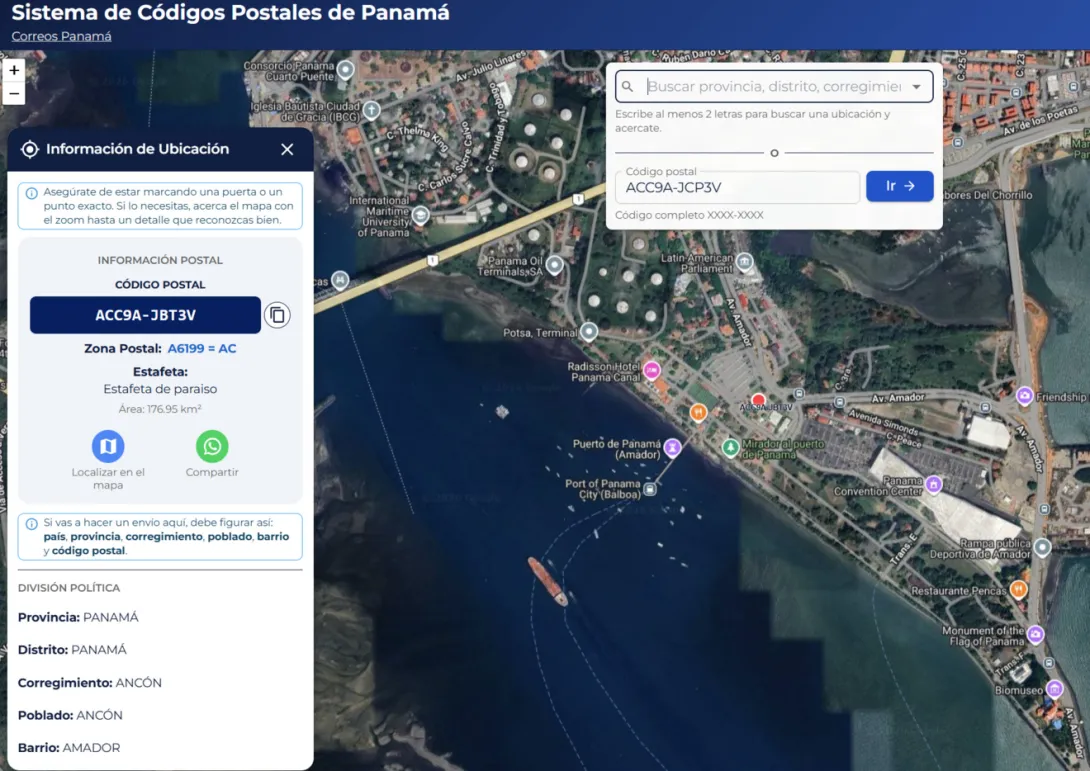
Every online purchase, emergency response, government service and postal delivery begins with one essential piece of information: an address. Today, however, postal addressing is evolving beyond its traditional postal function, becoming part of the digital infrastructure that connects people, places and services across modern economies.
Around the world, countries are progressively introducing digital postcodes and digital addressing systems, improving delivery accuracy and the efficiency of postal operations while supporting e-commerce, logistics, emergency response and public administration. As these systems evolve, ensuring that they can work together across borders is becoming increasingly important.
For the Universal Postal Union (UPU), this evolution represents an opportunity to strengthen postal addressing as part of the wider digital ecosystem. Through its Addressing Group, the UPU is exploring internationally harmonized approaches that support interoperability between national addressing systems while preserving national ownership. The objective is not to replace national solutions, but to enable greater compatibility between them, facilitating cross-border postal operations, e-commerce and digital services. This also means ensuring that new digital addressing elements can be validated and exchanged in standardized, machine-readable formats.
The UPU is also examining how expertise in addressing and geocoding – including the use of precise geographic coordinates to identify delivery points – can support more efficient last-mile delivery. At the same time, digital addressing systems are making location information easier to use by representing delivery points through simple digital addresses that can be shared across different services and platforms.
Panama is one country demonstrating what this transformation can look like in practice.
In the latest episode of the UPU's Voice Mail podcast, Omar Emilio Torres De León, Vice Minister of Commerce and Industry of the Republic of Panama and former Director General of Correos Panamá, explains how the country's National Georeferenced Postcode System was developed not simply as a postal initiative, but as digital infrastructure benefiting citizens, businesses and government alike.
Although Panama had an established street addressing system in urban areas, much of the country lacked a consistent way of identifying locations. Meanwhile, the rapid growth of e-commerce and last-mile delivery created a need for more precise location information.
Rather than replacing existing addressing practices, the georeferenced postcode system was designed to complement them, while building on existing government capabilities.
"We wanted to provide a technology for every Panamanian that was easy to use, easy to access and easy to share," says Torres De León. "This was designed to be something to be used, to be embedded in our culture and to make sure that it was alive and useful."
The project placed users at its centre. Existing government geographic information helped shape a solution adapted to Panama's geography, communities and delivery realities.
"I wouldn't say it's unique," Torres De León says. "I would say it's uniquely designed for us."
While addressing remains fundamental to postal operations, its importance now extends far beyond delivering letters and parcels. Reliable location information underpins e-commerce, emergency services, public administration and digital applications that depend on accurately identifying people, businesses and places.
For Torres De León, the long-term vision is to make location simpler for everyone. By making address information more standardized and accessible, everyday interactions – whether sending a parcel, receiving a delivery or locating a service – become faster, easier and more reliable.
Panama's experience also offers lessons for postal operators worldwide. According to Torres De León, the success of a modern addressing system depends not only on its technical design, but also on how easily it can be integrated into the platforms, applications and services that people already use.
As more countries modernize their addressing systems, postal operators are playing an increasingly important role in digital transformation. Beyond improving mail delivery, modern addressing supports more efficient logistics, stronger public services and greater accessibility for citizens and businesses alike. It can also contribute to broader national geospatial ecosystems and digital public infrastructure, reinforcing the postal sector's role in sustainable development.
While countries will continue to develop solutions tailored to their own needs, greater interoperability will become increasingly important as digital economies grow more interconnected. Without internationally harmonized approaches, the rapid development of separate national systems could lead to fragmentation and make cross-border postal operations and e-commerce more difficult. Through its work on addressing standards, the UPU is helping bridge these systems by supporting common standards that enable postal operators and international partners to validate and exchange digital address information across borders.
Panama's experience demonstrates that addressing is no longer simply about finding a destination. It is about helping people, communities, businesses and governments connect more efficiently with the opportunities of the digital economy.
Listen to the latest episode of the UPU's Voice Mail podcast featuring Omar Emilio Torres De León to learn more about Panama's National Georeferenced Postcode System and the future of digital addressing.