UNIDO
Shanghai, China, 23 July 2026 – The United Nations Industrial Development Organization (UNIDO) participated in the 2026 World Artificial Intelligence Conference (WAIC) and the High-Level Meeting on Global AI Governance, highlighting the importance of international cooperation, capacity-building and practical solutions to ensure that artificial intelligence contributes to inclusive and sustainable industrial transformation.
Led by Ciyong Zou, Deputy to the Director General and Managing Director of UNIDO, the delegation engaged with governments, international organizations, academia and industry partners on the future of AI applications in manufacturing, digital transformation and industrial development. These exchanges reinforced the importance of partnerships in ensuring that countries have the capabilities, skills, infrastructure and knowledge needed to benefit from AI and emerging technologies.
Commenting on the discussions, Zou said: “The future of AI will not be determined by technology alone. It will be shaped by the quality of our governance, the strength of our institutions and the depth of our international cooperation. The choices we make today—cooperation over fragmentation, inclusion over exclusion, trust over uncertainty and openness over isolation—will determine whether AI becomes a source of shared prosperity for all.”
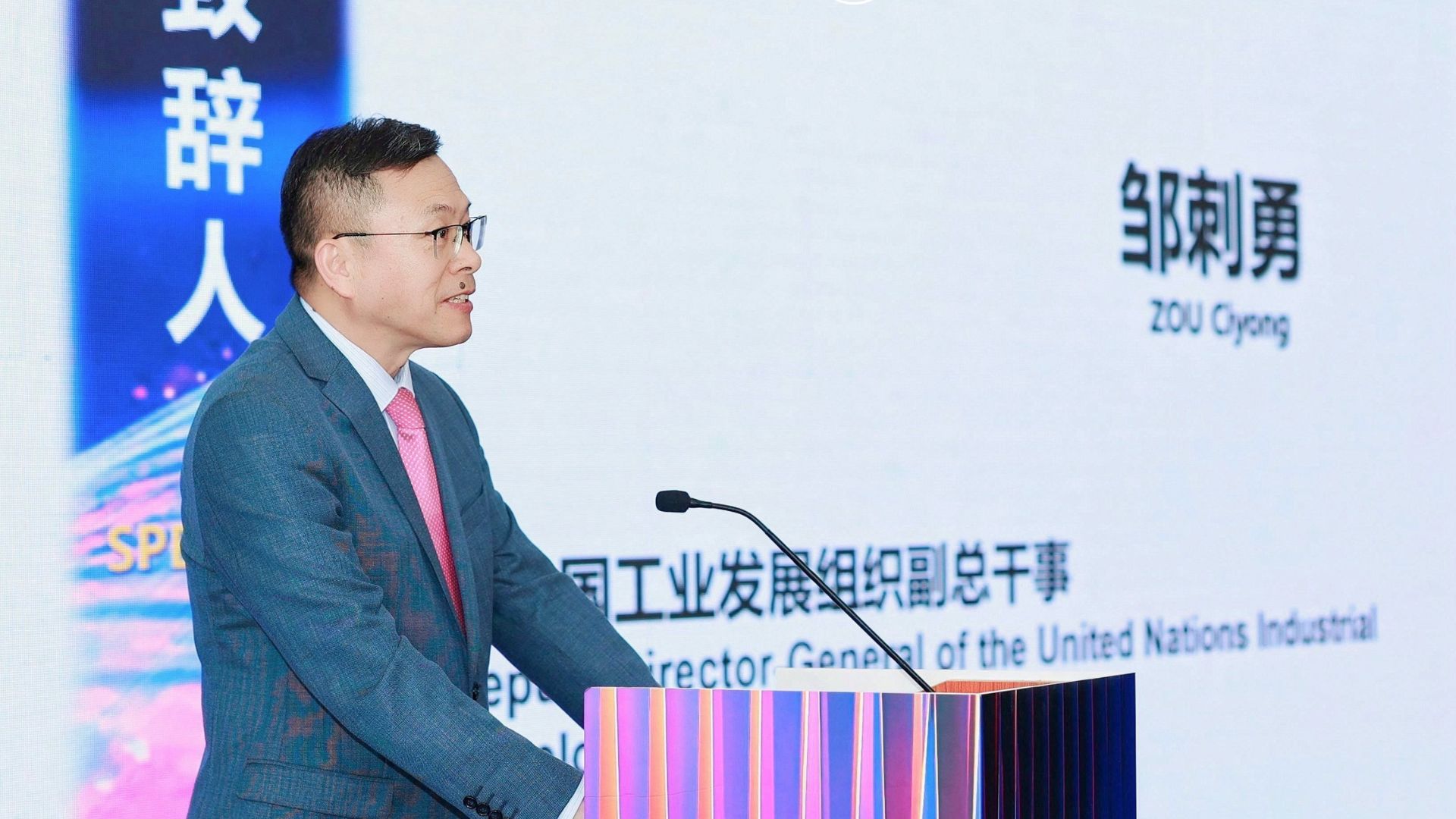
Ciyong Zou, Deputy to the Director General and Managing Director of the Directorate of Technical Cooperation and Sustainable Industrial Development, UNIDO, delivering remarks at the event hosted by the China University of Political Science and Law on 17 July.
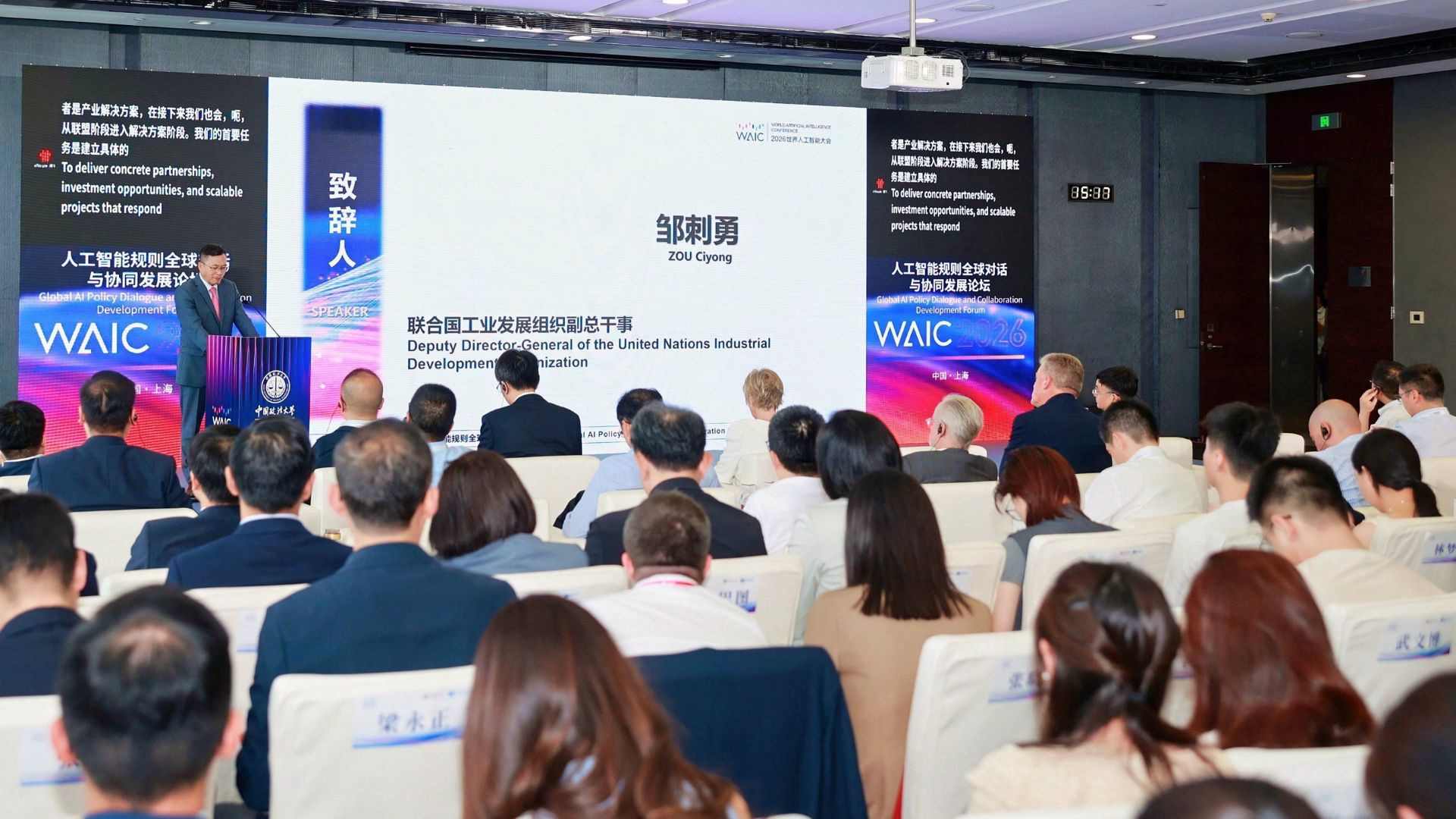
A significant development discussed during WAIC 2026 was the establishment of the World AI Cooperation Organization (WAICO), reflecting the growing momentum for stronger international cooperation on AI governance. The initiative highlights the importance of collaboration, knowledge sharing and collective action to ensure that AI development is inclusive and benefits all countries.
During WAIC 2026, UNIDO contributed to several initiatives aimed at strengthening global collaboration on artificial intelligence. Together with China’s Ministry of Industry and Information Technology and other partners, UNIDO supported the launch of the International AI Ethics Governance Action Plan, promoting cooperation on ethical principles and the responsible development of AI technologies.
A key outcome of the conference was the launch of the white paper AI for Industry: A Governance Framework, developed jointly by UNIDO, Tsinghua University, the British Standards Institution (BSI), the Shanghai Artificial Intelligence Research Institute and other partners. The publication provides guidance for the industrial application of AI, outlining six principles - safety, reliability, transparency, accountability, inclusiveness and sustainability - and introducing practical approaches for assessing and managing AI performance readiness levels.
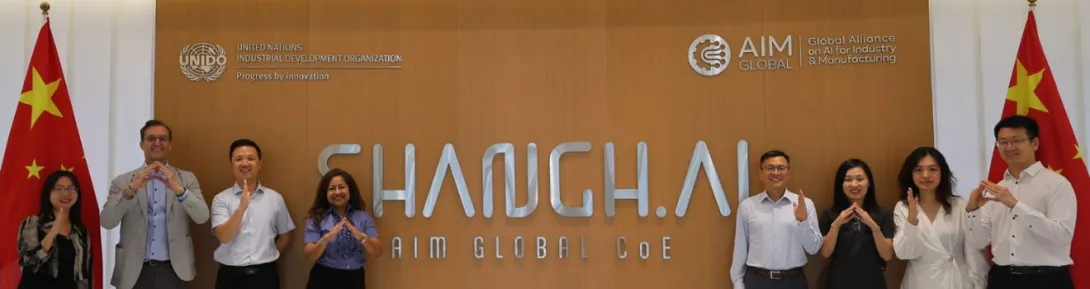
UNIDO also highlighted the progress of the Global Alliance on AI for Industry and Manufacturing (AIM Global), established to connect governments, industry, academia and international organizations in advancing the adoption of AI in manufacturing and industry. Through AIM Global and its network of Centres of Excellence, UNIDO continues to support knowledge exchange, technology cooperation and capacity-building, with a particular focus on developing countries.
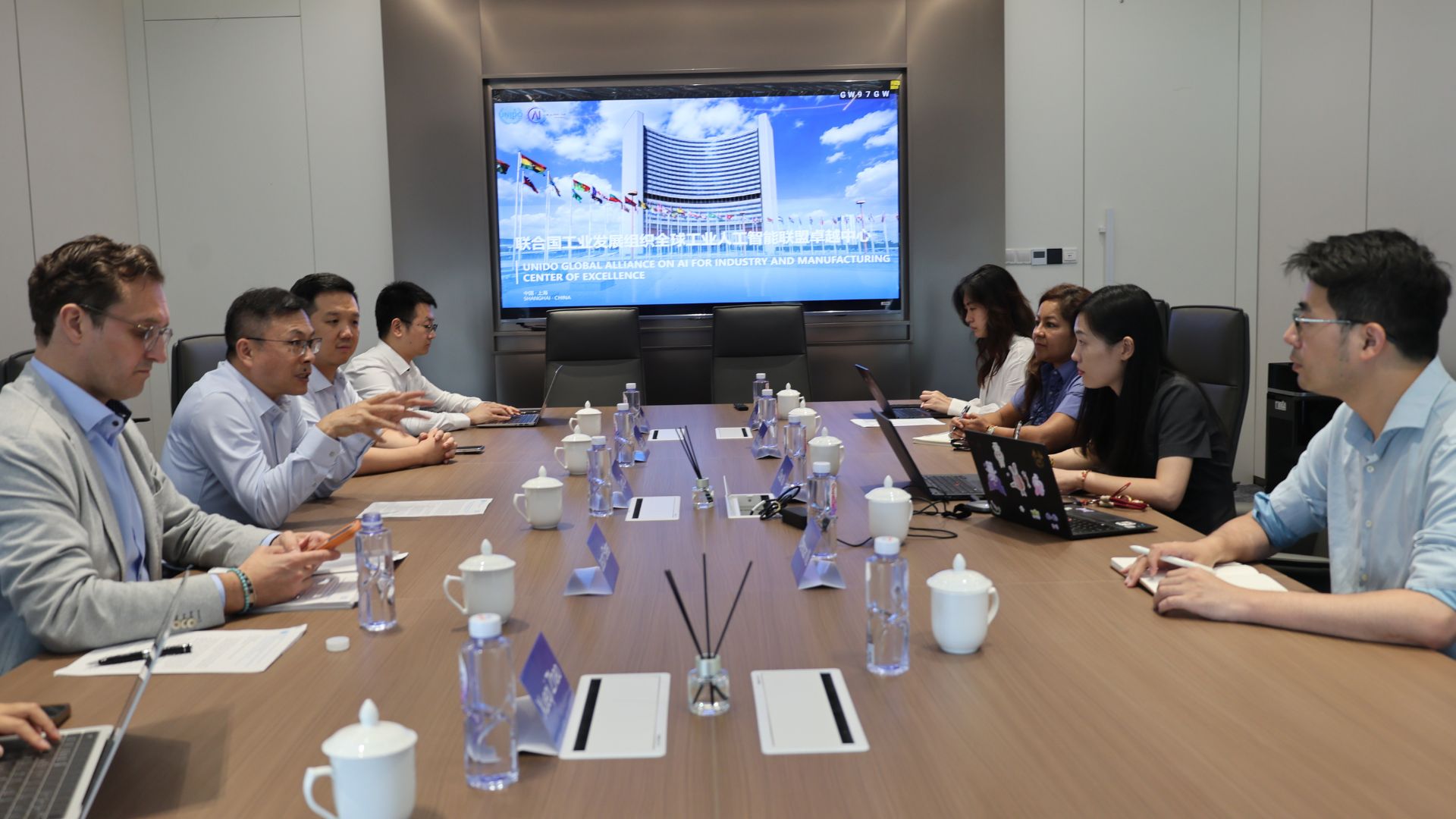
Jason Slater, Chief of UNIDO’s Division of Digital Transformation and AI, emphasized the importance of building practical pathways for countries to benefit from AI, noting: “UNIDO’s role is to build bridges: bridges between countries, between different levels of technological adoption, and between skills, innovation and responsible governance. Our aim is to help member states and ensure AI is for all.”
Looking ahead, UNIDO will continue to work with its partners to strengthen cooperation on industrial AI, support capacity development and help its Member States harness the opportunities of AI while translating technological advances into practical solutions that contribute to resilient and sustainable industries worldwide.
For more information, please contact:
Chief - Division of Digital Transformation and Artificial Intelligence