Launched in 2014, the FSM Connectivity Project expanded essential digital infrastructure, supported regulatory reform, and strengthened institutions. The project reached 88 percent of the population, half women, while internet use rose twenty-fold and data prices fell by 99 percent. These changes expanded access to education, business opportunities, and digital services across even the most remote islands of FSM.
Challenge
FSM is extremely isolated, more than 600 small islands spread across 2.9 million km² of ocean, making it difficult to deliver public and private services without reliable internet. Connecting this vast and dispersed geography required major investments in digital infrastructure. At the same time, a monopolistic telecommunications market limited competition and innovation, discouraging new investment. As a result, many communities lacked access to essential services, while businesses faced barriers to growth and job creation across the country.
Solution
In a small and remote economy like FSM, where private sector participation has historically been limited, strong collaboration between government, development partners, and private providers has been essential to expanding digital connectivity.
The World Bank’s approach to strengthening digital infrastructure in FSM has involved sustained engagement over 20 years. Early efforts focused on building the foundations for competition and private sector investment through clear regulation, safeguards against anticompetitive behavior, fair opportunities for market participants, and open access to essential infrastructure.
Building on these regulatory and institutional reforms, the World Bank financed “first mile” international connectivity linking FSM to the global internet. A second phase, started in 2020 and still ongoing, is expanding digital infrastructure across the middle and last miles, connecting users to reliable, affordable fiber broadband services.
Current investments are building on this foundation to support digital government services and the broader digital economy, complemented by advisory work on digital identification and cybersecurity through partnerships with Australia’s Department of Foreign Affairs and Trade and the Cybersecurity Multi-Donor Trust Fund housed in the World Bank.
-99%
Entry-level fixed broadband prices dropped by 99%, from $65 to $0.78 per Mbps per month, between 2014 and 2025.
Results
- Major Infrastructure Deployment (2018–2025): New submarine cables now connect Yap and Chuuk States through more than 1,500 kilometers of fiber optic infrastructure — including the 1,200 km Chuuk–Pohnpei Cable and the 316 km Yap Spur connecting into the SEA-US cable to Guam — while next-generation satellite services support Kosrae State. Together, these investments replaced slow, expensive satellite links with a faster, lower-cost digital backbone for the whole country.
- Drastically Lower Prices (2014–2025): Internet costs have fallen dramatically driven by more open markets. Entry-level fixed broadband prices dropped by 99 percent, from $65 to $0.78 per Mbps per month, while mobile broadband prices fell by 96 percent, from $705 to $30 per Mbps per month.
- Wider Access (2014–2025): Internet use increased twenty-fold, rising from 2 percent to nearly 40 percent of the population. As of 2025 the project reached more than 100,000 people (88 percent of the total population), with half of beneficiaries women, expanding access to the digital economy across FSM.
- Open Competition (2014–2025): New laws and regulations created an independent Telecommunications Regulatory Authority and an Open Access Entity. These reforms opened the market to new providers—(including Kacific, Starlink, and iBoom) bringing greater choice and competition.
- Connecting Remote Islands (2020–2025): Satellite technology now provides internet access to remote outer islands and community service points where fiber connections are not viable, ensuring no community is left behind.
- Stronger, Safer Networks (Ongoing): FSM now has a more resilient connectivity system with both cable and satellite links. It is also a landing point for the East Micronesia Cable system, benefiting people across FSM, Kiribati, and Nauru.
Contribution to WBG Targets and Jobs
By connecting some of the world’s most remote islands with reliable, affordable internet, the project is transforming access to digital services and opportunity across FSM. Results are disaggregated by gender. Expanded connectivity enables firms to grow and create more and better jobs by improving productivity and supporting worker skills and human capital.
Beneficiaries

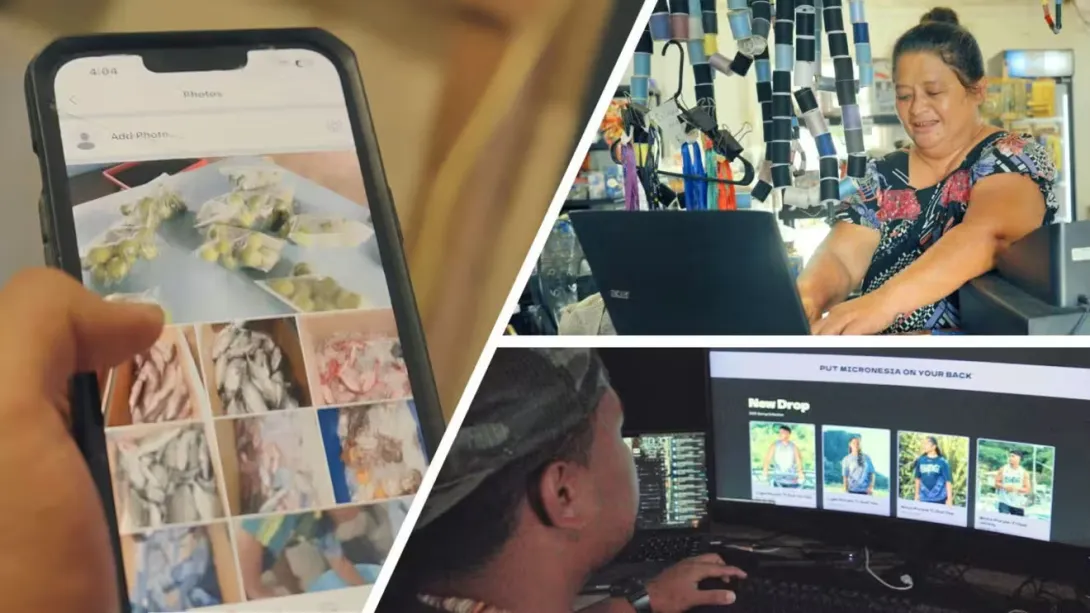
I do a shoot, just like a short 15-second video, post it up, and boost it on social media. People would share and then it would just go viral. Quality internet and fast speeds are very crucial for the company. I can sell a shirt from this shop to anywhere in the world.
Acer Apis
Founder of BRDFRT Co, Pohnpei

I use the internet to buy my ink cartridges, office supplies, school supplies. I do my business online. Even my local value-added products, to send it over to off-island people or friends or anywhere.
Merlinda
Owner of RJ Store, Kosrae
Lessons Learned
Market liberalization and the introduction of competition is a difficult transition and takes time, particularly in country and sector contexts where there is limited or no history of private sector participation. Sustained, consistent World Bank Group engagement is critical to help countries develop the necessary institutional and governance arrangements, build technical capacity, and secure long-term commitment to market reforms. Fundamental to this process are strong country ownership and leadership by local stakeholders who are committed to the long-term success of the program and development objectives.
Next Steps
Under the Digital FSM Project (approved in 2020) the World Bank is supporting the rollout of a nationwide Fiber to the Premises (FTTP) network and investments to establish the foundations for digital government and digital services, including digital ID and digital payments. Further investments are needed to complete the FTTP rollout, build capacity and ensure the long-term viability of key institutions, including the Open Access Entity and independent regulator, and to develop and extend support for digital services across the public sector, including at the state level. These investments in digital infrastructure and building strong institutional arrangements over the past 10 years are on the path to sustainability.