
Editor’s note: This is part 1 of a three-part series about digital tokenized bonds. Read part 2 and part 3.
The financial industry is entering a new chapter with the rise of Digital Tokenized Bonds (DTBs). Think of them as traditional bonds reimagined for the digital age--powered by blockchain technology to make debt markets faster, accessible, and more transparent. This three-part blog series will look at what DTBs are and why they matter (today’s focus); the risks and how to manage them; and where the future of DTBs is headed globally.
What makes DTBs different?
DTBs are essentially conventional bonds issued either digitally or made digital, with legal rights and obligations tied to an issuer (e.g., governments, corporates, or financial institutions), while cryptocurrencies are digital assets whose value isn’t backed by a specific promise from any organization. Unlike conventional bonds, DTBs live on distributed ledger technology (DLT) platforms. That means faster settlement and fewer middlemen; potentially lower costs thanks to streamlined processes; transparency through blockchain’s immutable records; and programmability—features like automated coupon payments or real-time tracking can be built right in.
Why should we care?
The potential advantages of DTBs include:
- Cost Efficiency: By reducing the number of intermediaries in the bond lifecycle and streamlining processes, DTBs may reduce issuance and operational costs;
- Simplified Operations: Automation would reduce manual intervention, minimizing errors and delays;
- Transparency: Blockchain’s immutable nature ensures greater visibility into transactions, fostering trust among stakeholders; and
- Impact Measurement: DTBs can facilitate improved results tracking and reporting on issuer goals, such as environmental or social impact, in real time.
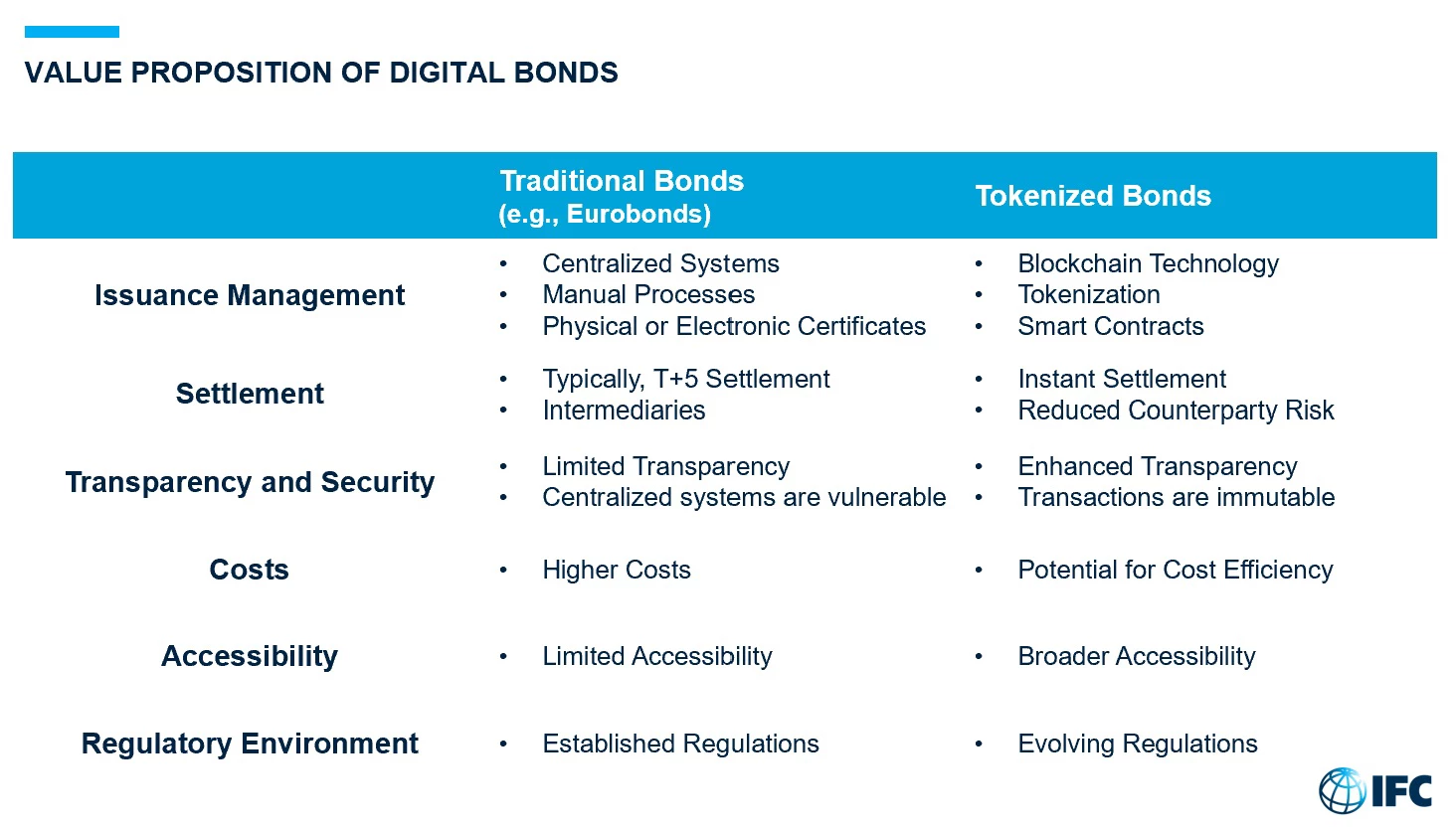
Of course, no innovation comes without challenges. Certain complexities in blockchain systems or smart contracts could pose a risk of disrupting current operations. Legal frameworks for tokenized financial instruments are still evolving, with varying levels of maturity across jurisdictions. Consequently, interoperability between DLT platforms and systems is only in the early stages of development. Secondary markets for DTBs are (still) underdeveloped, which is limiting investor access.
DTBs present a strategic opportunity to accelerate the development of debt capital markets in emerging economies, unlocking new pathways for investment and innovation. For IFC, supporting these innovative instruments is both a way to catalyze innovation in market infrastructure and to demonstrate scalable models that can attract new investors to emerging market assets, lower barriers to entry for both investors and issuers, and strengthen financial resilience and inclusion across capital markets.
At the World Bank Group, IFC is already actively exploring the potential of DTBs to drive innovation in emerging markets. WBG has issued DTBs across several DLT platforms to evidence the use case, then by collaborating with issuers has invested in several DTBs. IFC aims to demonstrate the benefits of tokenization and encourage broader adoption.
Curious about how DTBs could reshape your investment or issuance strategy? Stay tuned for the next blog in this series, where we’ll dive into the risks and how to navigate them.