
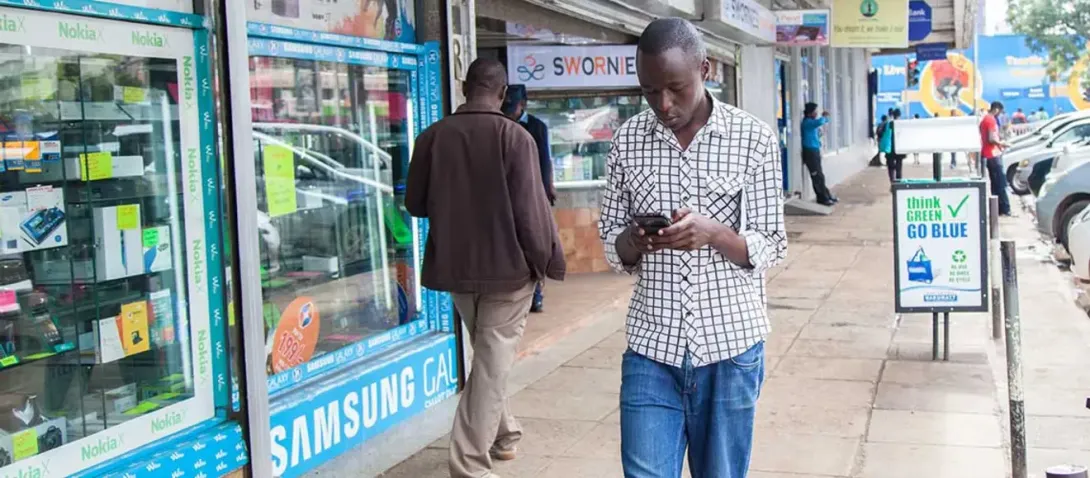
The Nairobi Central Business District. (Photo: Sarah Farhat/The World Bank)
Jobs are the surest way to end poverty and give people hope for a better future. That’s why countries need to build economies that unlock opportunities for people and convert growth into local jobs.
Yet household survey data across dozens of countries reveal a stubborn obstacle: the world's poorest people remain disconnected from the digital tools that now underpin labor markets, agricultural productivity, and economic mobility. Digital technologies cannot reduce poverty if they bypass the people who need them the most.
The digital divide is vast. Cellphone ownership has become near-universal across income groups, but internet and computer access remain sharply stratified. Among people living in extreme poverty—those with less than $3.00 per day—just 16 percent have internet access. Computer ownership is virtually nonexistent. Even among households above the extreme poverty line but below upper-middle-income thresholds, only half can access the internet, and barely one in eight can reach a computer. For most of the world's poorest people, the digital economy remains inaccessible.
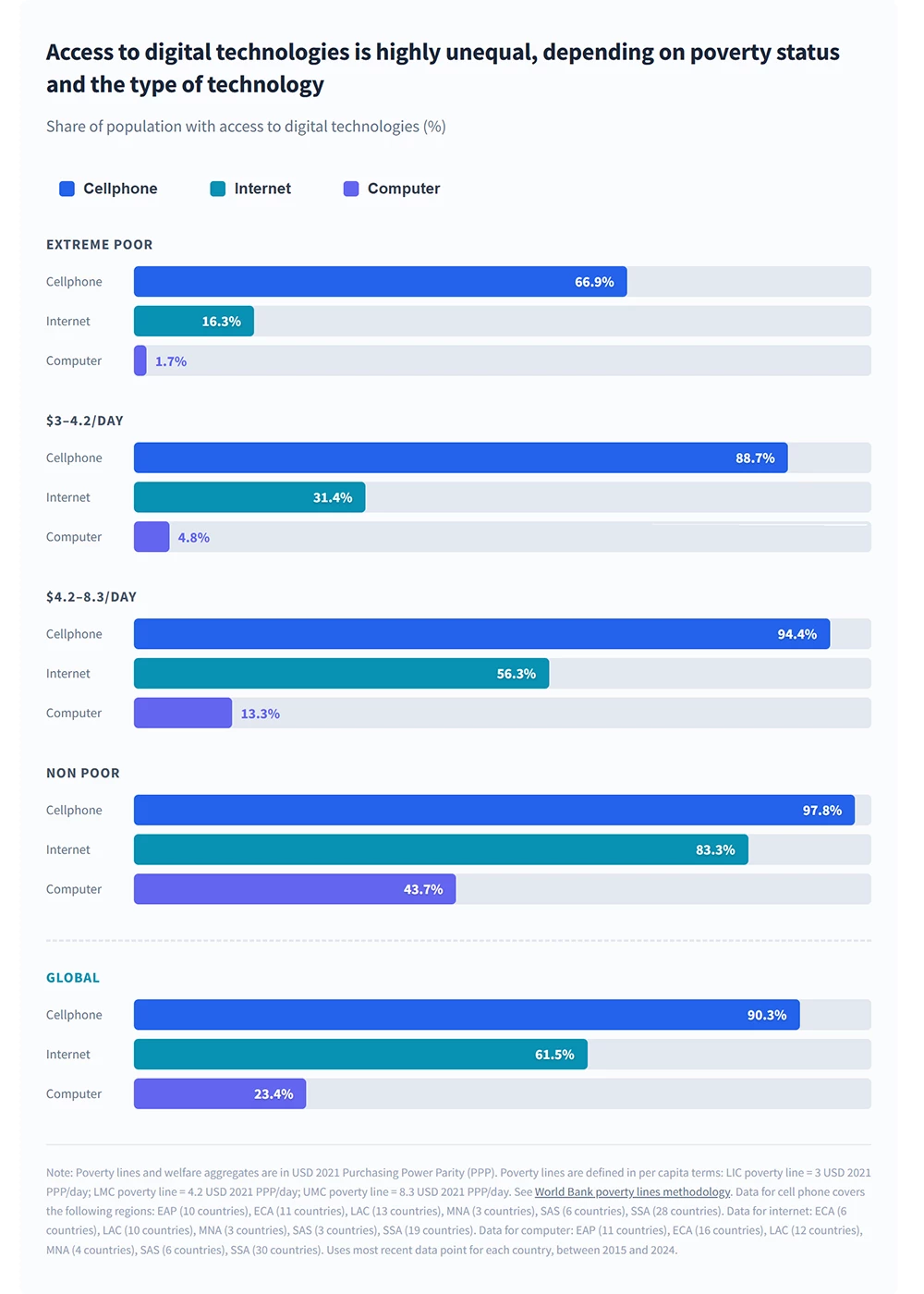
This matters because connectivity drives economic outcomes. A growing body of rigorous evidence links internet access to higher employment, better wages, and reduced poverty. Studies from Tanzania and Nigeria show that mobile broadband coverage significantly boosts household consumption and shifts workers from farm to non-farm employment. Mobile-phone-based information services have helped farmers secure better prices. The expansion of mobile broadband in Jordan has boosted women's workforce participation. Yet these benefits flow disproportionately to those who are already connected. The digital divide does not merely reflect poverty; it entrenches it.
A burden that falls hardest on the world’s poorest people
For the world's poorest people, multiple barriers block the path to connectivity. Cost is among the most significant. Although the poorest households spend far less in absolute terms on digital services, these expenditures consume a far larger share of their welfare—people living in extreme poverty allocate more than 5 percent of their consumption to internet access alone, roughly five times the burden borne by non-poor households. The 2025 Global Findex confirms this pattern: in South Asia and Sub-Saharan Africa, affordability is the barrier most commonly cited as preventing mobile phone ownership, especially among people living in poverty. But affordability is only part of the story. At least 1.18 billion people are energy poor and unable to use electricity, a prerequisite for any digital technology. And even where infrastructure exists, limited digital literacy prevents many from using technology effectively.
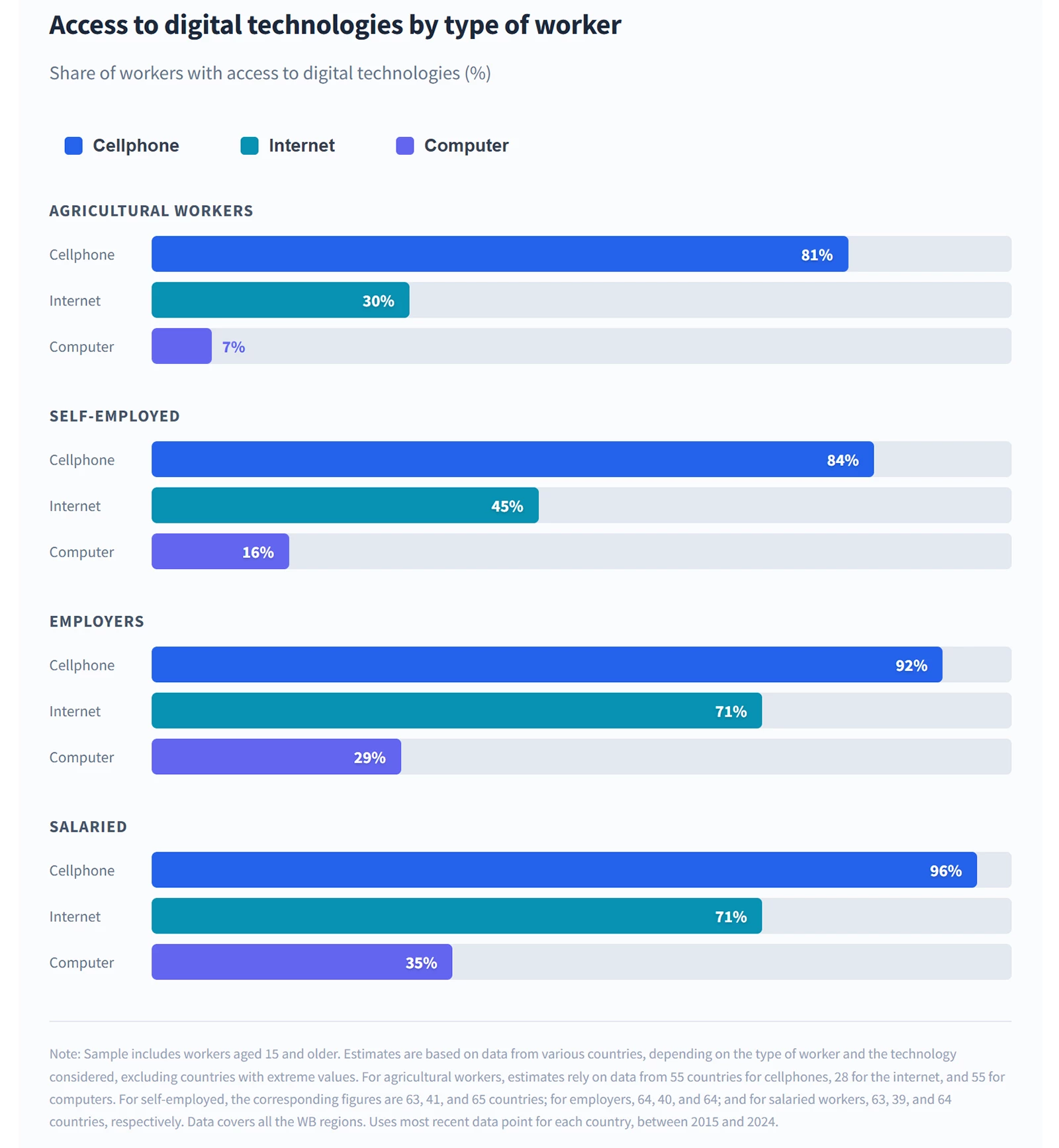
These barriers do not fall equally. Rural populations face internet access rates of just 39 percent, compared with 75 percent in urban areas. Households headed by someone with only a primary education are half as likely to have internet access as those headed by university graduates. Agricultural workers—precisely the population that might benefit most from digital tools to access markets and adopt improved practices—are the most excluded group. Just 30 percent report having internet access, and only 7 percent have access to a computer.
The employment imperative
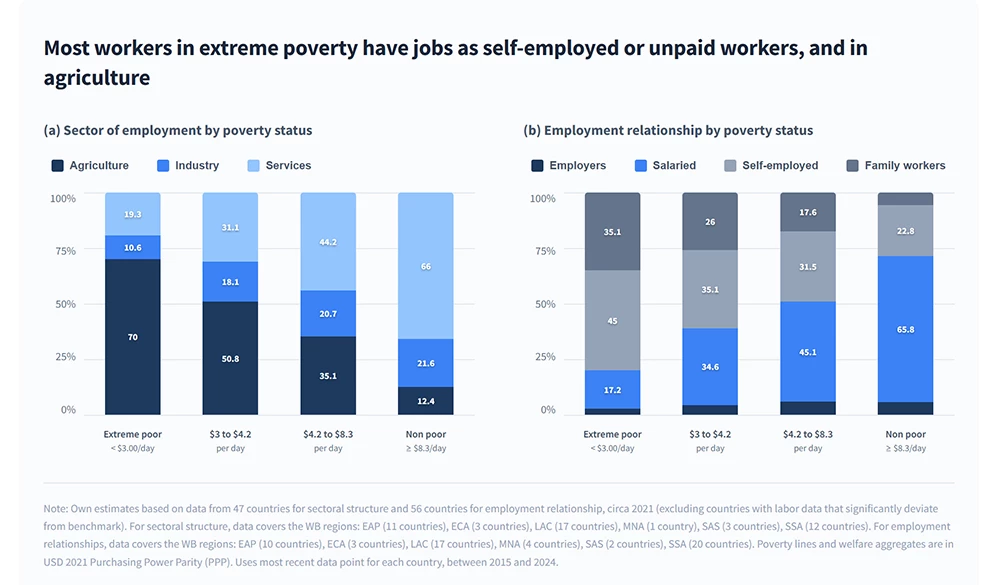
The stakes extend well beyond connectivity statistics. Seventy percent of the global population living in extreme poverty work in agriculture, often as smallholder farmers with limited integration into productive value chains. Eighty percent are engaged in independent or unpaid work. If digital tools can improve their market access, enhance productivity, and support technology adoption, the payoff for poverty reduction could be substantial. The evidence suggests they can, but only if access is extended to those currently excluded.
Over the next decade, more than 1 billion young people in developing countries are expected to reach working age. Current projections suggest far fewer jobs will be created than are needed to absorb these workers. Closing that gap will require every available tool.
Digital technologies, when accessible and affordable, can help farmers fetch better prices, workers find employment, and entrepreneurs reach new markets. But technology that bypasses people living in poverty cannot lift them out of it. If job creation is to be the explicit aim of development, then ensuring the digital economy includes the poorest and most vulnerable people is not optional – it is critical.