UN Trade and Development (UNCTAD) helps developing countries benefit from the global economy more fairly and effectively, by providing data and analysis, facilitating consensus-building and offering technical assistance on issues related to trade and development.
EXCLUSIVE INTERVIEW
- How does UN Trade and Development’s work and activities specifically touch upon e-commerce and the digital economy?
UN Trade and Development (UNCTAD)’s E-Commerce and Digital Economy (ECDE) Branch in the Division on Technology and Logistics aims to contribute to enhanced inclusive and sustainable development gains from e-commerce and the digital economy for people and businesses in developing countries, particularly least developed countries (LDCs).
The ECDE Programme works with government policymakers and development partners, civil society and the private sector to strengthen the readiness of developing countries to harness the opportunities and address the risks presented by digitalization in four main ways, by:
- Providing better evidence on what policy changes are needed at the national, regional and international level to generate more inclusive and sustainable outcomes in the data-driven digital economy, including through the biennial Digital Economy Report;
- Offering tailored assistance to low-income countries to build their capacities to engage in and benefit from e-commerce and the digital economy (eTrade Readiness Assessments, E-commerce Strategies, E-commerce and Law Reform, Measuring the Digital Economy);
- Empowering women digital entrepreneurs in developing countries to become more visible as role models and therefore better heard by policymakers to foster change in the business enabling environment (eTrade for Women);
- Paving the way for more collaborative efforts and effective partnerships to make better use of scarce resources in the area of digital for development and build consensus (eTrade for all, eWeeks, Intergovernmental Group of Experts).
UNCTAD is the focal point on consumer protection within the UN system, and is mandated to oversee the implementation of the United Nations Guidelines for Consumer Protection. The consumer protection programme helps countries to better protect consumers while also stimulating economic competition. The aim is to promote an environment where business, including e-commerce, can thrive and consumers can have the confidence they need to engage in and benefit from national and international e-commerce markets.
The programme provides tailored technical support and training for government officials, consumer organizations, businesses and academics. The ultimate objective is to establish legal and regulatory frameworks to protect and empower the consumer and ensure e-commerce develops in a way that benefits everyone.
Trade Logistics programme helps understand and address the challenges facing trade logistics and leverage underlying opportunities relating to e-commerce. It encompasses optimizing transport and transit operations, creating efficient transport networks, facilitating the financing of sustainable freight transportation, undertakes substantive research and analysis and advises on a wide range of legal and policy issues affecting transport and trade. By supporting the operational, economic, legal and environmental aspects of trade logistics, it helps create a transport system where e-commerce can be more reliable, more efficient and more sustainable. The programme also assists stakeholders from the private and public sectors to participate in trade facilitation reforms to make cross-border e-commerce transparent, fast and predictable.
TrainForTrade programme focuses on building trade knowledge and skills in developing countries so governments, businesses and citizens can capitalize on the opportunities of international trade and e-commerce. It provides tailor- made technical assistance and training for countries.
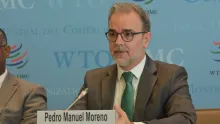
Stronger partnerships are key to ensuring trade supports resilience, creates opportunities and delivers sustainable development for all.
Trade can drive inclusive and sustainable development, but it cannot deliver on its own – this was the message from UN Trade and Development (UNCTAD) at the WTO Public Forum 2026 held in Geneva on 15-17 September.
NEWS
READ MORE NEWS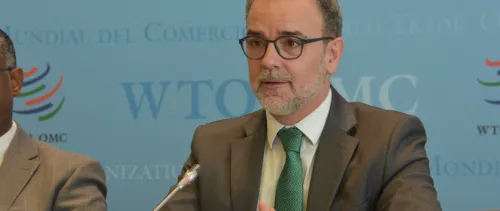

EVENTS
DISCOVER MORE EVENTS
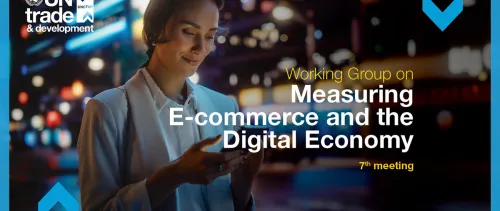
3 - 4 December 2026
Working group on measuring e-commerce and the digital economy, 7th meeting