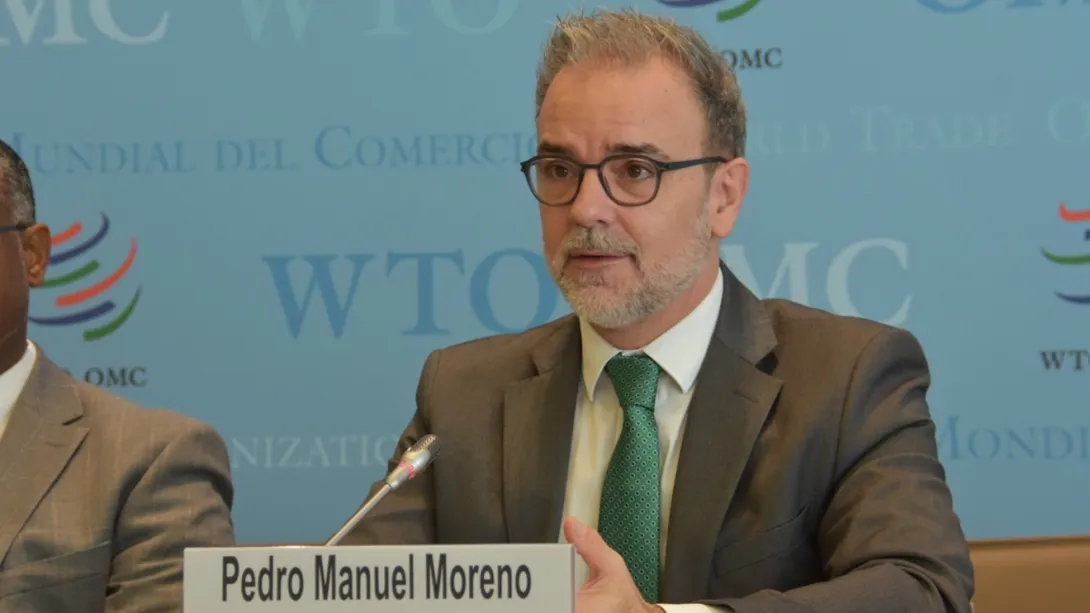
© UNCTAD Photo | Acting Secretary-General Pedro Manuel Moreno spoke at a session during the WTO Public Forum 2026 on 17 September.
Stronger partnerships are key to ensuring trade supports resilience, creates opportunities and delivers sustainable development for all.
Trade can drive inclusive and sustainable development, but it cannot deliver on its own – this was the message from UN Trade and Development (UNCTAD) at the WTO Public Forum 2026 held in Geneva on 15-17 September.
Across its participation in the forum, UNCTAD highlighted the need for stronger cooperation across trade and other policy areas, including industrial policy, services, technology, finance and investment.
Such cooperation is key to helping countries turn policy ambition into concrete development gains while strengthening their resilience to global shocks.
Making digital services work for development
This year’s WTO Public Forum focuses on services trade, the fastest-growing sector of global commerce. Services exports have grown at more than twice the pace of goods exports over the past decade.
Speaking at a session on building digital-ready services economies, UNCTAD Acting Secretary-General Pedro Manuel Moreno highlighted the opportunities created by the rapid growth of digitally delivered services, while pointing to a widening gap between countries.
Digitally deliverable services now account for 56% of global services exports. But they represent just 16% of services exports in least developed countries, compared with 61% in developed economies.
Digital readiness requires more than internet access, Mr Moreno noted, underlining the importance of reliable payment systems, logistics, skills and access to capital.
Greater coherence among digital trade rules developed at bilateral, regional and multilateral levels is also essential.
“The goal isn’t uniformity, but compatibility,” Mr Moreno said.
Protecting vulnerable economies from trade shocks
At the session “Hormuz in crisis: Protecting vulnerable economies”, discussions examined how disruptions to critical maritime routes can quickly spread through the global economy.
The Strait of Hormuz carries around 11% of global maritime trade by volume and about one third of seaborne oil exports. Since late February, the effects of the ongoing crisis have quickly spread from shipping to energy prices, fertilizer and transport costs, food prices and financial markets.
The impact is particularly acute for least developed countries and small island developing states, 61 of which depend on imports of both oil and cereals. Many entered the crisis with high debt and limited financial buffers.
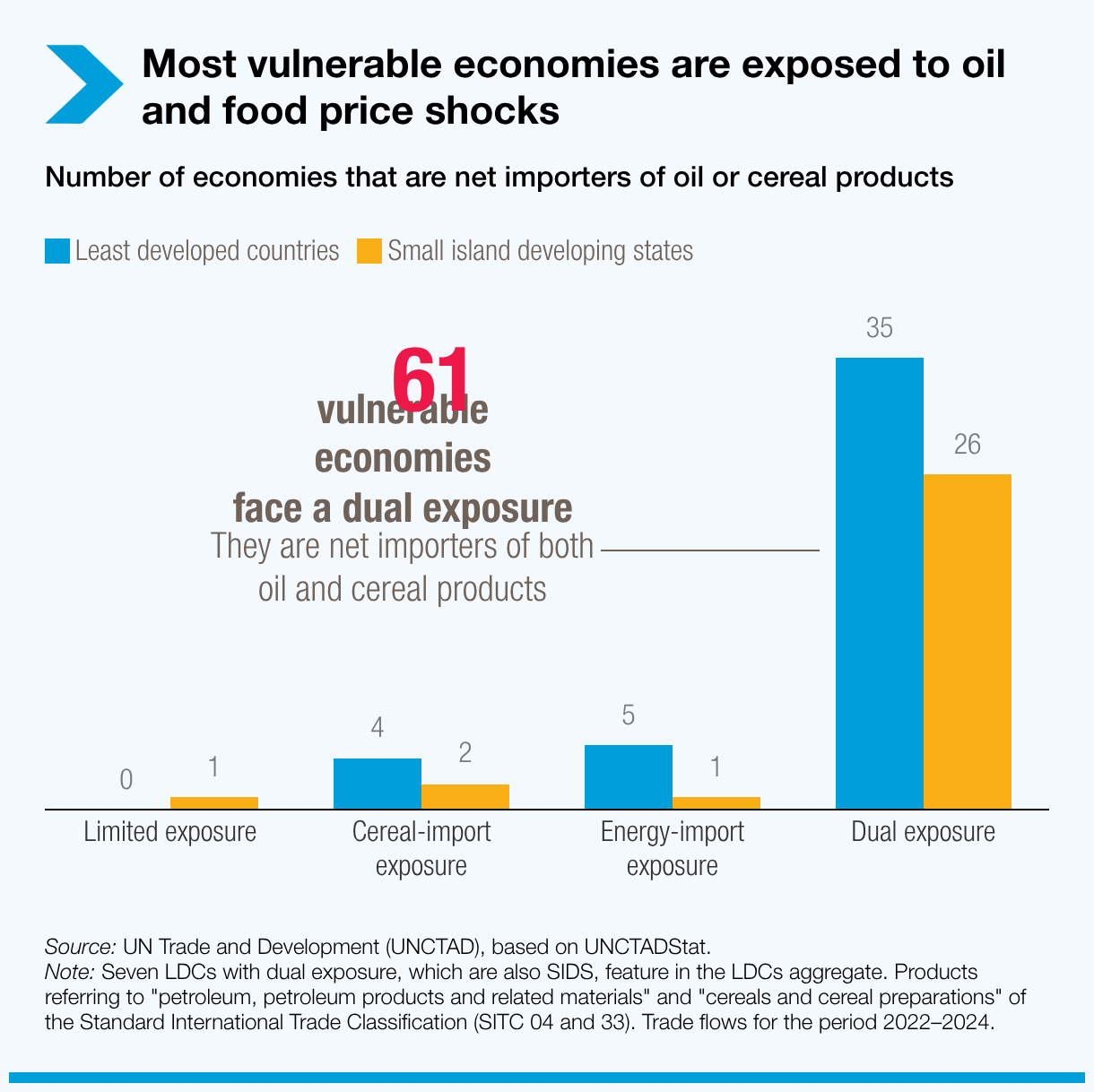
UNCTAD analysis estimates that a 50% rise in oil prices could add $20.4 billion a year to oil import costs for these economies.
Fertilizer disruptions pose another concern, as around one third of global seaborne fertilizer trade normally passes through the Strait of Hormuz. Higher energy and fertilizer costs can affect farmers, food prices and future harvests.
“Shocks travel quickly, but they leave slowly,” said Acting Secretary-General Moreno, stressing the need for early-warning systems linking shipping, energy, food and finance, as well as access to liquidity, trade finance and reliable logistics when crises hit.
“Keeping maritime routes open, safe and predictable is not only a question of trade. It is a condition for development,” Mr Moreno concluded.
RELATED NEWS