

Photo credit: Adobe Stock Photo/Jacob Lund
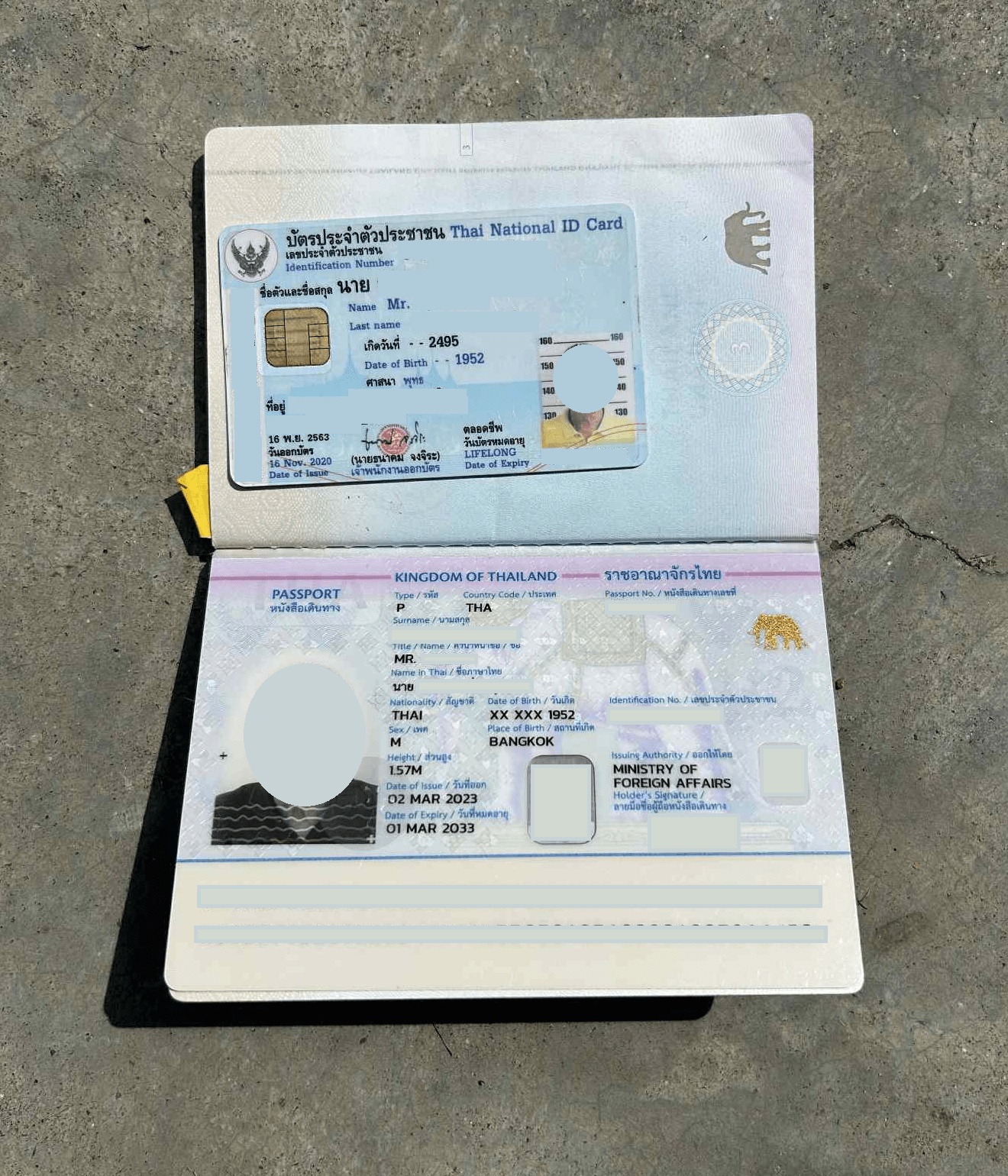
My father, born in Thailand to immigrant parents, over 70 years ago, had his birth registered at age four, long after anyone remembered the exact date. Today, his birth record reads “--/--/1952,” a legacy gap that blocks him from online identity verification.
Personal identity has evolved from a sociocultural and legal construct to the backbone of structured data to support governments and the private sector. Accurate civil records, especially birth details, are essential for legal recognition, age verification, and access to services. However, many face legacy issues from past registration practices, with records that are incomplete (e.g., missing parameters) or inaccurate (e.g., discrepancies between documents). These gaps, often overlooked, present serious challenges in increasingly automated and interconnected systems.
A full birth date - day, month and year - is essential for identity verification, legal recognition and access to education, healthcare, financial services and international mobility through employment and travel.
Many people still live with legacy records from earlier registration systems — incomplete, inaccurate or inconsistent. Before digital databases and automated validation, birth registration was often done on paper, delayed or missing key information such as the exact date of birth.
In Thailand, some IDs show “--/--/YY.” In Bangladesh, teachers or local officials sometimes assign a default date — often 1 January — when registering older children for school, especially in rural areas and among those with lower education levels. These data gaps have become serious obstacles in a digital age.
Consequences of incomplete birth records
Incomplete or incorrect birth records pose serious challenges in the digital era. Automated systems across sectors rely on standardized, complete data. The absence of a full birth date often triggers system rejections, requiring costly, error-prone interventions. This disconnect between legacy documentation and modern infrastructure results in digital exclusion from services needing precise identity verification.
Consequences include delays or denials in healthcare, education, employment, travel and legal processes like marriage or retirement. These gaps weaken a country's efforts to enhance its Civil Registration and Vital Statistics (CRVS) system, directly leading to less effective and less efficient policy planning, resource allocation and monitoring progress toward development goals.
Finding practical solutions
Several countries have implemented innovative measures to address incomplete civil registration. Since 2018, Switzerland has replaced the "00.00" placeholder for incomplete birth dates on ID cards with a fictitious date. People with the old format can exchange their documents under the new policy.
In Australia, the Department of Home Affairs uses an assumed date for migrants with unknown exact birth date. This is set as December 31 for unaccompanied minors and January 1 for all other individuals.
In 2018, Thailand's Bureau of Registration Administration authorized registrars to update birth records for citizens with unknown birth dates, using the first day and/or month of the birth year upon request.
Policy recommendations for inclusive identity systems
Addressing the issue of incomplete birth records requires a two-pronged strategy: retrospective and forward-looking:
a. Retrospective solutions
Launch government-led programs to update incomplete records. This can be achieved by simplifying procedures and using a combination of affidavits, historical records, and community testimony. The goal is to reach affected populations, especially those in rural and older communities.
b. Forward-looking reforms
Focus on strengthening future birth registration systems. This involves using modern digital infrastructure and trained personnel to ensure new records are complete and accurate. ESCAP has extensively worked to address the challenge of incomplete and inaccurate birth registration data by collaborating with partners to implement the CRVS System Improvement Framework, a tool designed to help stakeholders analyze and redesign civil registration processes to effectively register every birth, death, marriage and divorce.
c. Multi-Pronged Strategy
- Government-led rectification: Implement national campaigns to update birth records, simplify procedures, and ensure accessibility for all populations.
- Technological adaptation: Use automated systems that allow for flexible data entry and alternative verification methods. Train developers to create inclusive identity formats.
- Public awareness and outreach: Educate citizens on the importance of complete documentation through culturally sensitive materials and partnerships with community organizations.
Ensuring every individual has a complete and verifiable birth date is crucial for equity, inclusion and human rights in a data-driven world.
The complete date of birth is more than a bureaucratic detail; it is a gateway to full participation in society. As digital systems become the norm, governments and institutions must ensure that historical oversights do not become permanent barriers. Through targeted reforms, inclusive technology, and public engagement, we can build identity systems that empower everyone in the global digital ecosystem. This momentum is evident in the Asia-Pacific region, where many countries have strengthened their CRVS systems, as highlighted in the recent ESCAP report, Progress Made on Civil Registration and Vital Statistics in Asia and the Pacific After a Decade of Getting Every One in the Picture.