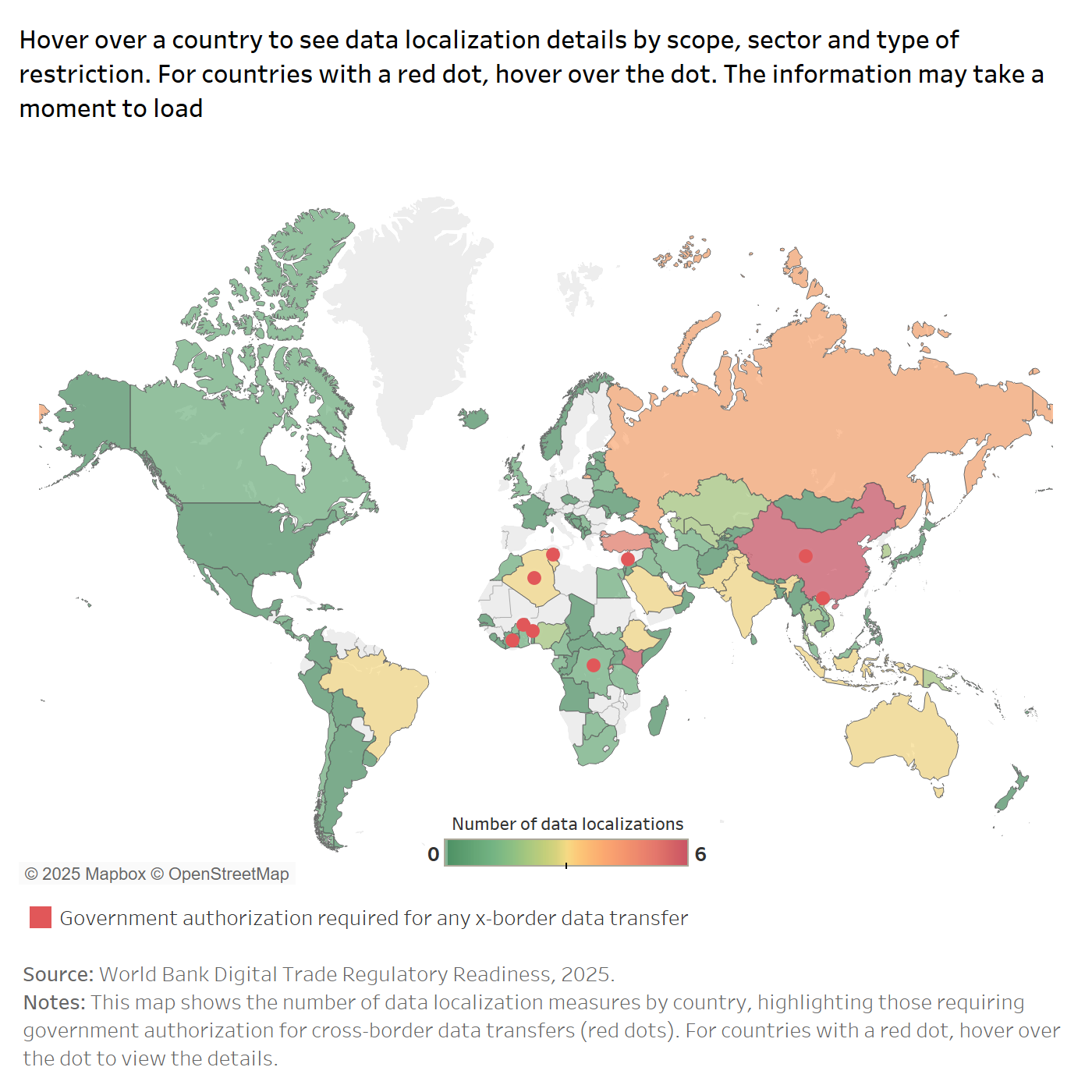

Data localization—the requirement to store or process data within national borders—has become a defining feature of digital policy in many countries. In particular, personal data localization rules, which mandate that individuals’ data be kept onshore, are on the rise globally. These measures are often introduced to protect privacy, enhance cybersecurity, or assert digital sovereignty. However, they can also increase compliance costs, fragment digital markets, and pose challenges for cross-border innovation and trade. Countries like India, Nigeria, and Brazil have adopted multiple localization requirements, while others apply them only in specific sectors such as finance, health, or telecom. This policy variation highlights differing regulatory approaches and national priorities.
Understanding these trends is critical for shaping forward-looking digital trade strategies that promote trust, efficiency, and global collaboration. The Digital Trade Regulatory Readiness (DTRR) Database offers an internally consistent, comparative framework to track these developments across countries and assess their implications.